
From the Hills to the Mills

Glossop is a Gateway to the Peak District sitting across the A57, one of the main east-west trans-pennine routes, as well as the north to south route from Yorkshire via Longdendale and Hayfield, through Chapel-en-le Frith and Buxton to Ashbourne and then further south. The landscape owes its shape to the Ice Age, the ice carving the valleys and leaving boulders or Glacial Erratics probably our oldest historic objects, brought from the far north. There an example in Howard Park near Wood’s Hospital and another on the Pyegrove. Later Ice ages left deposits of boulder clay and this was followed in periods of warmer weather by woodland which in its turn decayed to form the thick layers of peat which covered the hilltops to give our characteristic moorlands.
Prehistoric Times
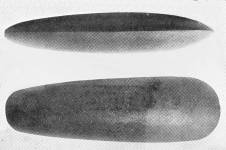
There is little trace of Paleolithic or Old Stone Age man [500,000-8,300 BC] within our immediate area but there is some evidence of Mesolithic or Middle Stone Age [8,300-3,500 BC] and Neolithic or New Stone age [3,500-1,800 BC] visitors as flints have been found on the edges of the Longdendale Valley and on the edges of the moors.
 |
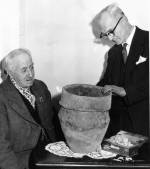 |
Of the Bronze age [1800-1000 BC] we also have little evidence other than a burial Urn found on the south edge of Shire Hill near the Royal Oak Inn on the A57.
Part of the Roman Empire
 |
 |
The Romans came to Glossop towards the end of the 1st Century.The timber and earth fort of Melandra at the west end of the valley, above the junction of the Glossop brook with the Etherow, flowing down the Longdendale valley was probably part of a temporary frontier across Britain set up by Agricola as the Twentieth Valeria Victrix Legion and its associated Auxiliary units moved up the west side of the Pennines through the territory of the local Brigante tribes.
The Fort seemed to have been rebuilt in stone in the early 2nd Century and for some time it had a large civil settlement around it.

The Dark Ages, Domesday Book and The Middle Ages – Dale & Manor
Probably at some time in the 7th Century settlers began the farmsteads to which they gave their Anglian names – Glossop, Hadfield, Padfield, Charlesworth, Chisworth, , Gamesley and Simmondley.

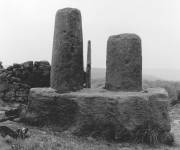
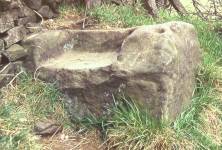
After the Norman Conquest the hamlets in the Glossop dale were listed and the area “the Manor of Glossop” became part of the Royal Forest of the Peak and William Peveril became High Steward. Later the Manor was given to the Abbey of Basingwerk in Flintshire. The records of this time are mainly concerned with local farmers cultivating bits of the forest or illegally hunting or chopping down trees or disputes over the boundary between the Manor and Royal Forest. Boundary Markers such as the Robin Hood’s Picking Rods or the Abbot’s Chair and some of the various crosses remain.
|
|
|
The House of Norfolk
The Abbot of Basingwerk leased the Glossopdale land to the Talbot family. The later Talbot Earls of Shrewsbury held the manor and in 1606, through Alathea Talbot, it went to her husband Thomas Howard, 14th Earl of Arundel.
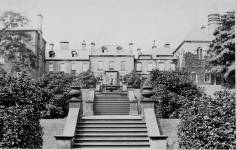
Through several generations and branches of the Howard family Glossop became part of the land of the 12th and 13th Dukes of Norfolk who did much to improve the area and the name ‘Howardtown’ became used for a rapidly growing township. By 1869 there was a Baron Howard of Glossop resident in Glossop Hall on the land west of Old Glossop.
The Textile Industry
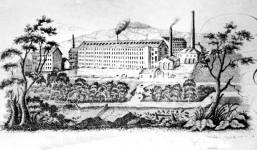
The skills of the local farmers included the spinning and weaving of wool into cloth for their own use. With the use of cotton to make finer fabric and the invention of hand powered and later water powered machines to speed production, factories were set up in Glossopdale. The damp climate and the plentiful water supply here was ideal and from the late 18th century mills were built on the local streams. The local millowners became the major employers of a rapidly growing town as textile worker came from neighbouring counties and across the Irish sea. There were eventually over 40 mills in Glossopdale.
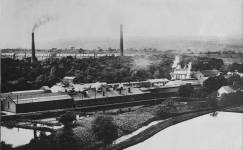
Calico printing and paper production at Turnlee soon followed as contributory factors to the growth of Glossop
Roads and Rails

The tracks and lanes that joined the outlying hamlets and farmsteads avoided the marshy and often flooded valley bottom and soon better lines of communication were needed. Turnpike Trusts built roads from Chapel-en-le Frith to Glossop and from Marple Bridge to Glossop and from Manchester to Sheffield and these crossed the Glossop Brook at Bridge End. This later became the centre of the new town of Glossop with the building of the Town Hall in 1837 and the Market in 1844.
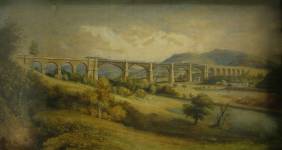
The Duke of Norfolk commissioned the building of the Glossop Railway Branch line built to join the Manchester Sheffield and Lincolnshire line at Dinting in 1844
The Buildings
|
|
|
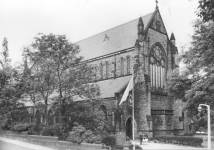

The Howard family and the Glossop millowners donated the land and money to build most of the public building of the town. The Wood family, the Partington’s, the Sidebottoms and others ensured that the Churches, Chapels and Library and Public Baths were provided for the use of the growing population.
The Parks
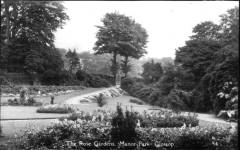
The public open spaces were only provided at a late date. ‘Howard Park’ and Wood’s baths opened in 1887 with the building and landscaping paid for by the Wood family. The Howards gave the land in the centre of Glossop to create Harehills in 1922, to commemorate the loss of their son Philip and all the other local men who gave their lives in World war I. The Glossop Hall parkland became Manor Park, opened in 1927.
Glossop Heritage Trust
Glossop Heritage Trust was founded to preserve the history of the town at a time when so much was vanishing. You can find out more about the Trust and its work here.
Please see the Support GHT page, for ways you can help the Trust to preserve and promote the heritage of Glossop for the future.