

Location: Howard Park, Glossop
Donor: Daniel Wood of Howardtown Mills, Glossop on land donated by Lord Howard of Glossop
Architect: Mills and Murgatroyd, Manchester
Builder: Messrs Robert Neill and Sons, Manchester
Foundation Stone Laid: 30 July 1887
Date Opened: 21 January 1889
Owner: Glossop Borough Council (1886-1948); NHS (1948-2014); Reuben’s Retreat (2014-present)
Jubilee Gifts to Glossop
Daniel Wood, one of the owners of Howardtown Mills in Glossop, announced the gift of a hospital in November 1886. The gift was one of the Great Jubilee Gifts to Glossop in celebration of the Golden Jubilee of Queen Victoria.
The idea of a hospital had come to him some years before after an attack of bronchitis. He had thought to himself “that if he suffered so much as he did when surrounded with all the comforts and luxuries that wealth would bestow, how sad must be the condition of the poor people of Glossop when similarly afflicted.”
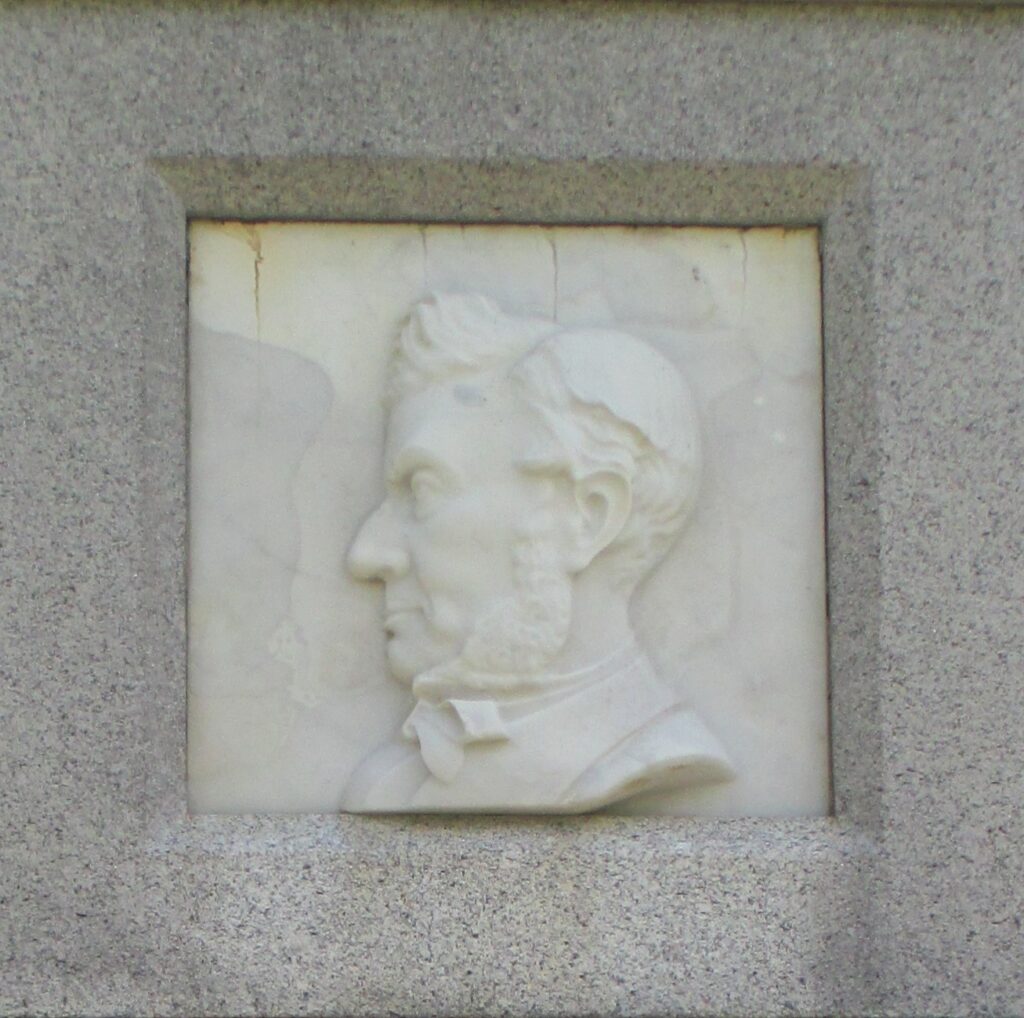
He had originally planned to leave the money for a hospital in his will. However, he changed his mind on the announcement of the other jubilee gifts by Herbert Rhodes, Edward Partington and his brother Samuel Wood, who donated the baths and park.
Daniel Wood offered a gift of £25,000, of which £5,000 would go towards the cost of the building and £20,000 as an endowment for its future. He placed the responsibility for the construction and running of the hospital in the hands of Glossop Borough Council. They set up a committee to oversee the project.
Mills and Murgatroyd
The land for the hospital formed part of the complex that included Howard Park and Woods Baths. It was donated by Lord Howard of Glossop, who owned the Glossop-dale Estate. The land was conveyed later with a covenant that the building should always be used for health care.
The building was designed by Mr Murgatroyd of Mills and Murgatroyd, Manchester, who also designed Woods Baths. Mr Murgatroyd was also the nephew of Daniel and Samuel Wood.
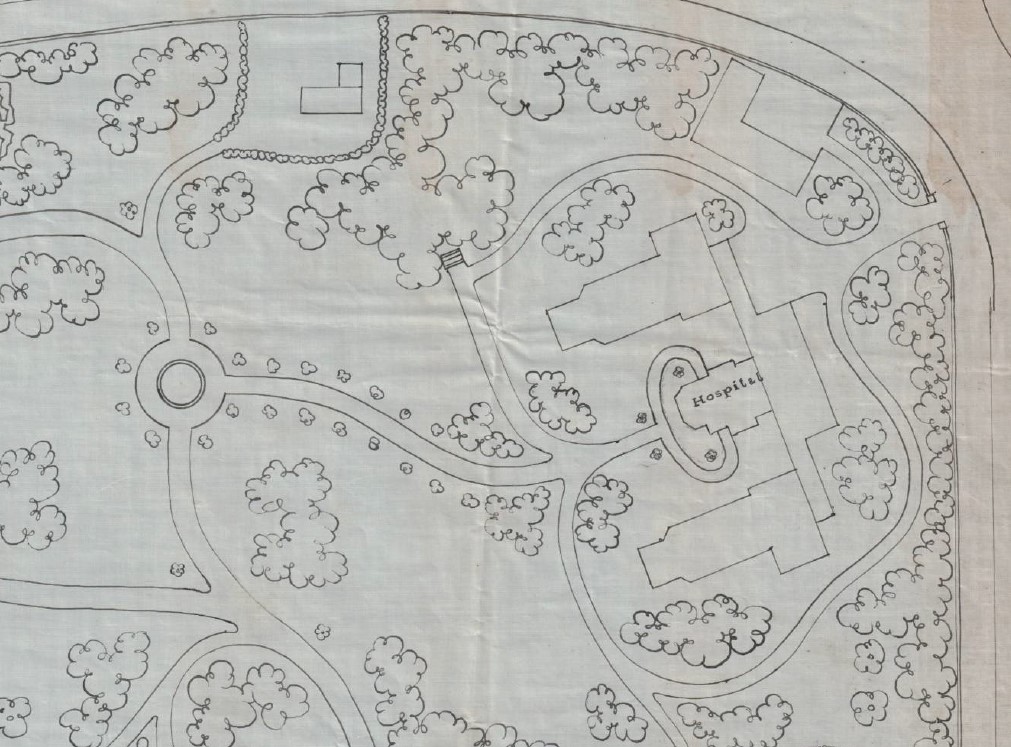
The plans were ready by December 1886 and work began to lay the foundations in the winter months so building operations could begin in the Spring.
Foundation Stone
On 30 July 1887 there were grand celebrations in Glossop as the foundation stones were laid in Woods Hospital, Woods Baths, Howard Park and Victoria Hall. The day started with a procession of 4000 people from Norfolk Square to the site of the hospital where the first ceremony took place.
Daniel Wood was unfortunately too ill to attend. The laying of the stone was done by James Sidebottom, the Mayor.
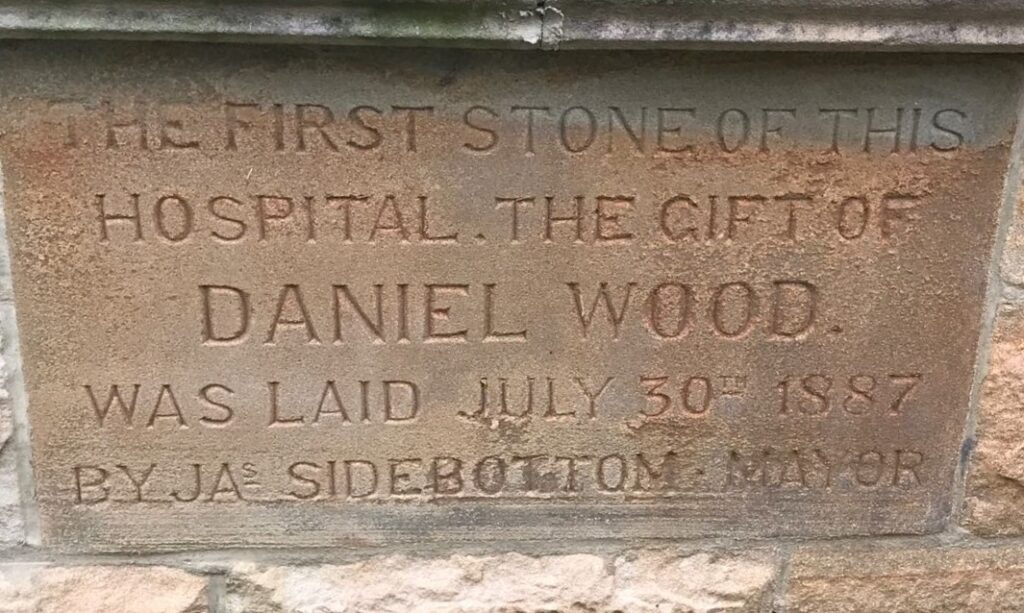
In a cavity below the stone was deposited a copper canister, hermetically sealed, containing copies of the Glossop-Dale Chronicle, and three other local newspapers, the architect’s description of the building, a Victoria medal, and several silver coins of the present year’s date.
Speeches were made and the Mayor was presented with a silver trowel and mallet and an illuminated address to Daniel Wood thanking him for his generous gift.
Death of Daniel Wood
Messrs Robert Neill and Sons were chosen as the contractors and building steadily progressed throughout 1887. The building went over budget and the gift was adjusted to £6,000 for the building and £19,000 for the endowment.
Sadly, Daniel Wood never saw his generous gift completed as he passed away on 7th February 1888. His death was followed a few months later by his brother, Samuel Wood.
A memorial was set up in Howard Park by public subscription in 1889 to honour the two brothers and the gifts they gave. Woods Memorial can still be seen in Howard Park today by the Swimming Pool.
Splendid Hospital

The hospital was set on high ground on the edge of Howard Park and provided an ideal spot for those convalescing there. “From its elevated position and its sunny terrace, the eye roams with pleasure over the varied, far-stretching outlines of the moors and hills which embrace the western, southern, and eastern sides of the Glossop Valley.”
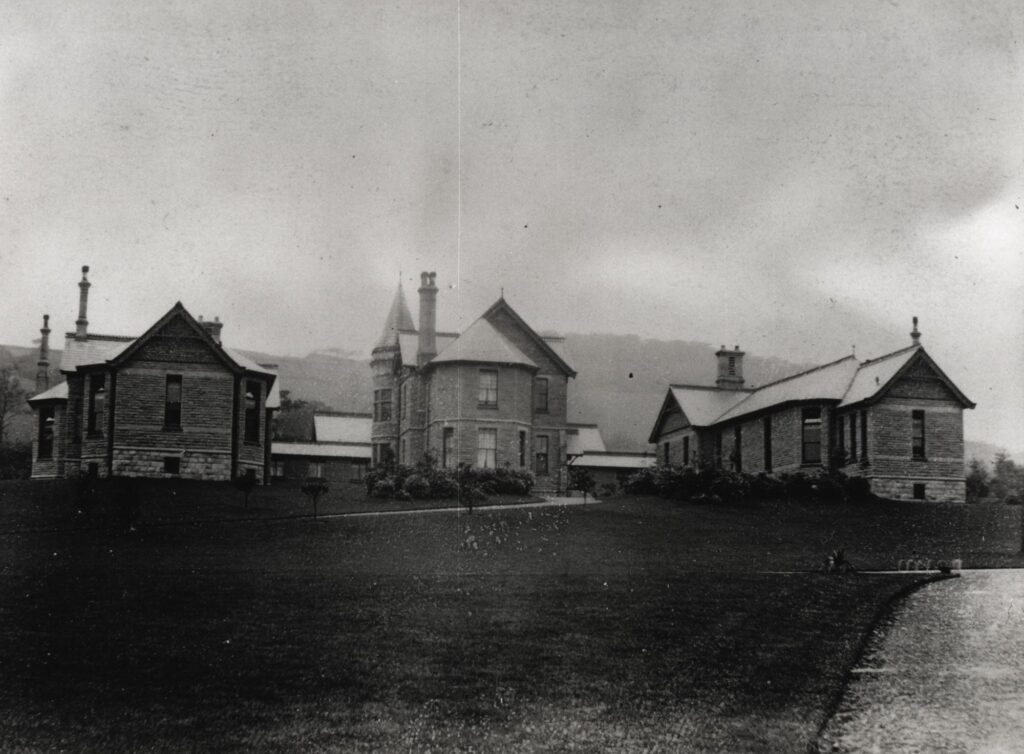
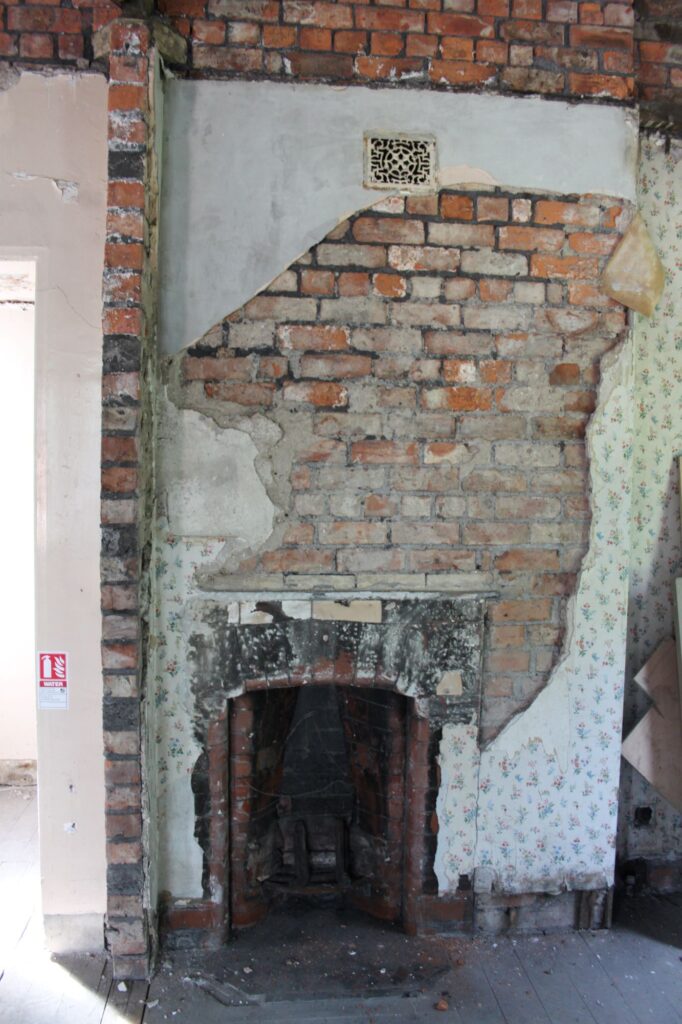
The main building was laid out in an ‘E’ shape. On each side were one storey wards, one for women and one for men. These contained a minimum of six beds and one side had an ingle nook fireplace. At the end of each ward were lavatories and a bath. One each side there was also a room containing two special beds and a nurses’ kitchen and scullery.
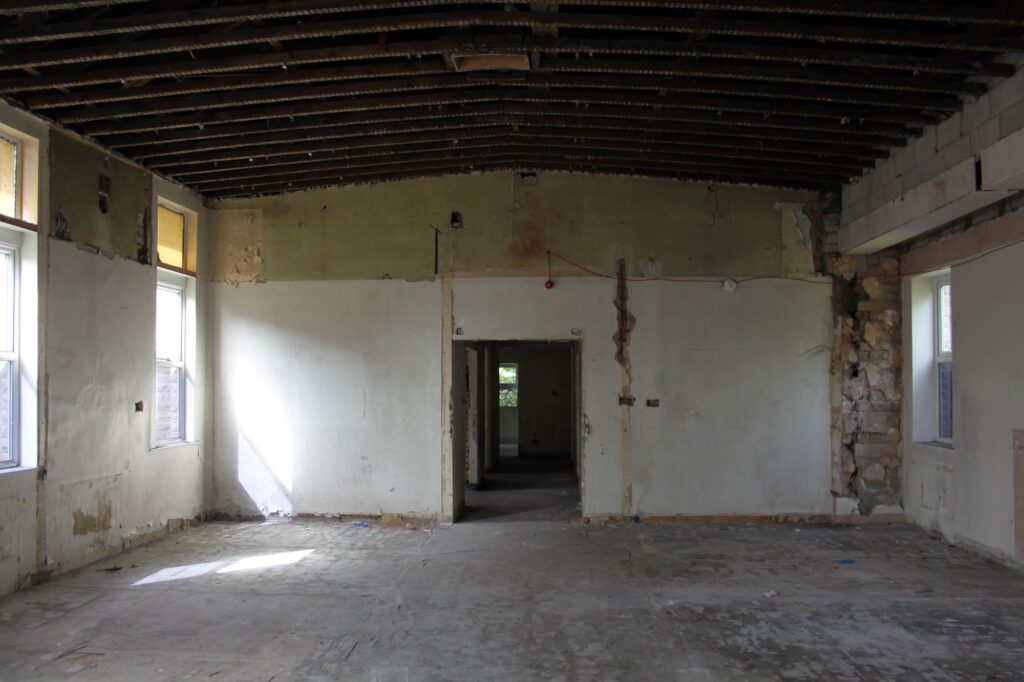
The central block between the two wards was for administration. It contained the matron’s apartments, who lived on site, as well as rooms for domestic servants and nurses. There were also surgeons’ rooms, a kitchen, scullery, dispensary, store rooms and operating theatre.
State of the Art
The building was state of art for sanitary conditions for hospitals at the time and of the best possible quality. The wards were built 4ft above ground level. There were ventilated openings in the walls below floor level to permit the free sweep of air and to “prevent any damp or miasmatic exhalations rising from the ground into the wards”. The floors were made of cement concrete carried on iron girders and finished with solid wood-block flooring.

The external walls are made impervious to wet by a sheet of asphalt being fronted in between the outer and inner faces. Both the wards and corridors had windows on both sides so they could be cross ventilated. The internal walls were lined for some height with glazed brick.

The hospital was faced with stone and slated with greenish coloured slate. The original roof slates have survived 135 years and were restored by Reuben’s Retreat as part of their renovations.
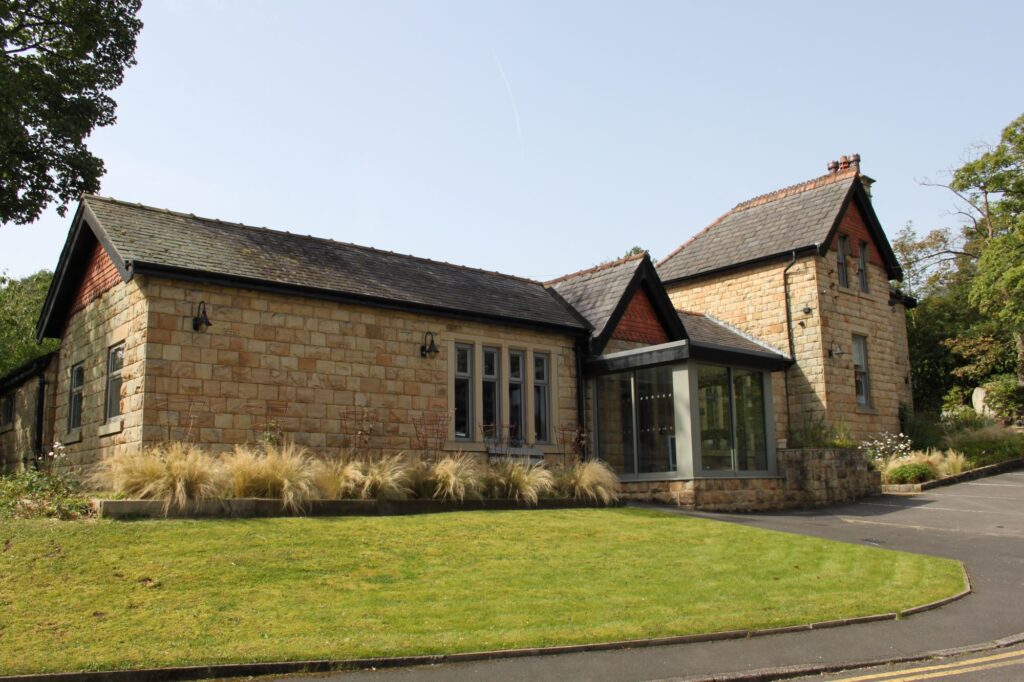
Nearby the hospital was a boiler house, wash house, laundry and lodge keepers’ house and stables. In the early days of the hospital the medical practitioners would attend on a rota and stay at the hospital, so needed somewhere to keep their horses.
Opening

Woods Hospital was finally opened, without ceremony, on 21st January 1889. It was over budget and required donations to complete the furnishing of the interior. Mrs John Wood of Whitfield House, the sister in law of Daniel Wood, and John Wood, her son, donated £1,600 for this purpose.
The linen for the new hospital was that used in the cottage hospital on Shaw Street which closed after Woods Hospital was opened. There was a new zinc torpedo washing machine from Torpedo Washer Co. Huddersfield, which was the lowest price around. The beds were enamelled claret frames and supplied by Mr Rowcliffe of Gamesley.
Running Bills
Glossop Borough Council were responsible for the running of the hospital and the treatment of patients. The generous endowment of Daniel Wood provided for this, but it was not enough. There were 16 beds in the hospital, but in the beginning the Council could only afford to provide for 8 patients at a time. Some local individuals including Anne Kershaw Wood paid to sponsor more beds.
Payments needed to be made to the medical practitioners, the staff and for the medical instruments and medicines including the bill for medicinal wine and spirits. The minute book records a typical order of 1 dozen of port wine, 2 gallons of brandy, 4 dozen of porter (a type of beer).
There were later cases recorded in the newspapers of requests from the Council that the medicinal wine and spirits usage needed to be reduced, as the bill was too high!
The first matron was Ellen Warrner who earned £30 per annum and was supplied with a dress and cap.
Rules for Admission
The rules for admission as a patient were strict. Patients would only be admitted if someone was paying for treatment, such as an employer. They also had to be residents of Glossop Borough for at least 6 months and be treated for no longer than 6 weeks without further recommendations. Those who did not meet the rules would have to seek treatment in Ashton or Manchester if they could make it there.
Hospital Fundraising
From the very beginning the hospital was short of funds. Various donations were made in the first few years by wealthy local individuals, but more still was needed.
In July 1894 the first open air music festival was held to raise funds for Woods Hospital. Processions were formed in Norfolk Square and Old Cross, Hadfield. A crowd of 5,000 then paraded up to a field near Howard Park where a lengthy programme of bands and choruses were performed.
This tradition carried on until the NHS took over the building and running of the hospital upon its formation in 1947. Pretty much every year there were concerts, carnivals, bazaars and balls and continued donations by individuals and businesses. This was rarely enough.
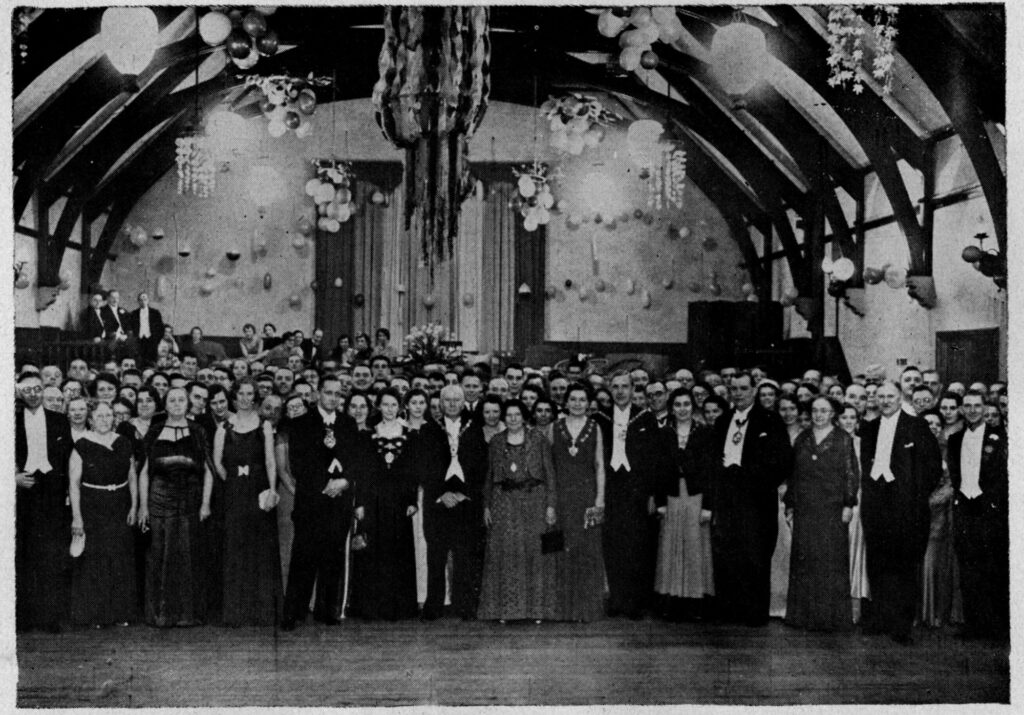
In 1920, Mrs Partington, the first woman Mayor of Glossop, founded and led the Glossop Hospitals Collection Committee, which held very big events to fund Glossop’s Hospitals and make the contributions that were being requested by Ashton Infirmary and Manchester Infirmary for treating Glossop patients.
Despite all the fundraising there were times when Glossop Borough Council debated whether to close Woods Hospital due to its financial position.
NHS
A new surgical unit at Woods Hospital for minor and major operations was introduced in 1930. £8,000 was spent on modernising the hospital between 1945 and 1948.
In 1948 responsibility for the hospital was passed to the NHS. After a couple of years of reorganisation, the new hospital boards were trying to make savings and efficiencies.

In 1949 Glossop Borough Council put up a hard fight to stop Manchester Regional Hospital Board closing the surgical unit at Woods Hospital. It was said “…the closing of Woods Hospital [surgical unit] would mean a visit to Ashton, causing expense, inconvenience, loss of time, and discomfort in travelling”. After a hard fight they lost the battle and the surgeons were removed.
In 1962 when the Regional Board suggested a large and comprehensive hospital at Ashton and the closure of Woods Hospital and the Partington Maternity Home. It was said the small periphery hospitals could not provide the modern medical services that the larger centres would be able to offer. It was acknowledged that the future of Woods Hospital could be to relieve the ‘geriatric problem in the region’.
Extensions

Small extensions were added to the hospital at various times to enlarge the space available. From available photographs most of these were added by the NHS.
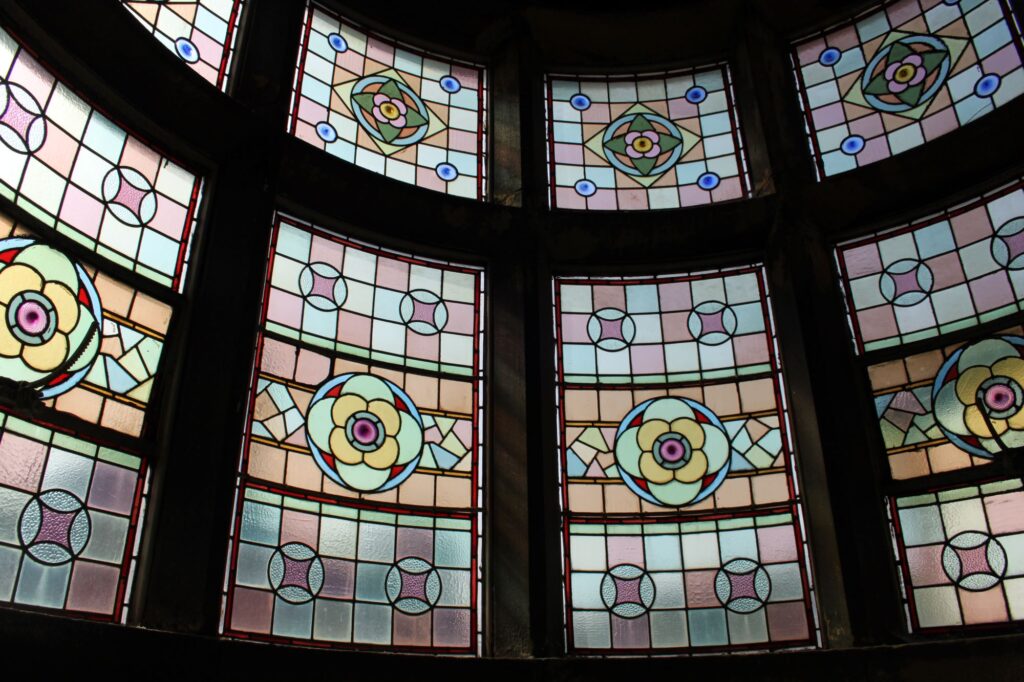
A new octagonal day room was added to the front of the hospital in 1975 that would be ‘very beneficial to patients’.
L.S. Lowry
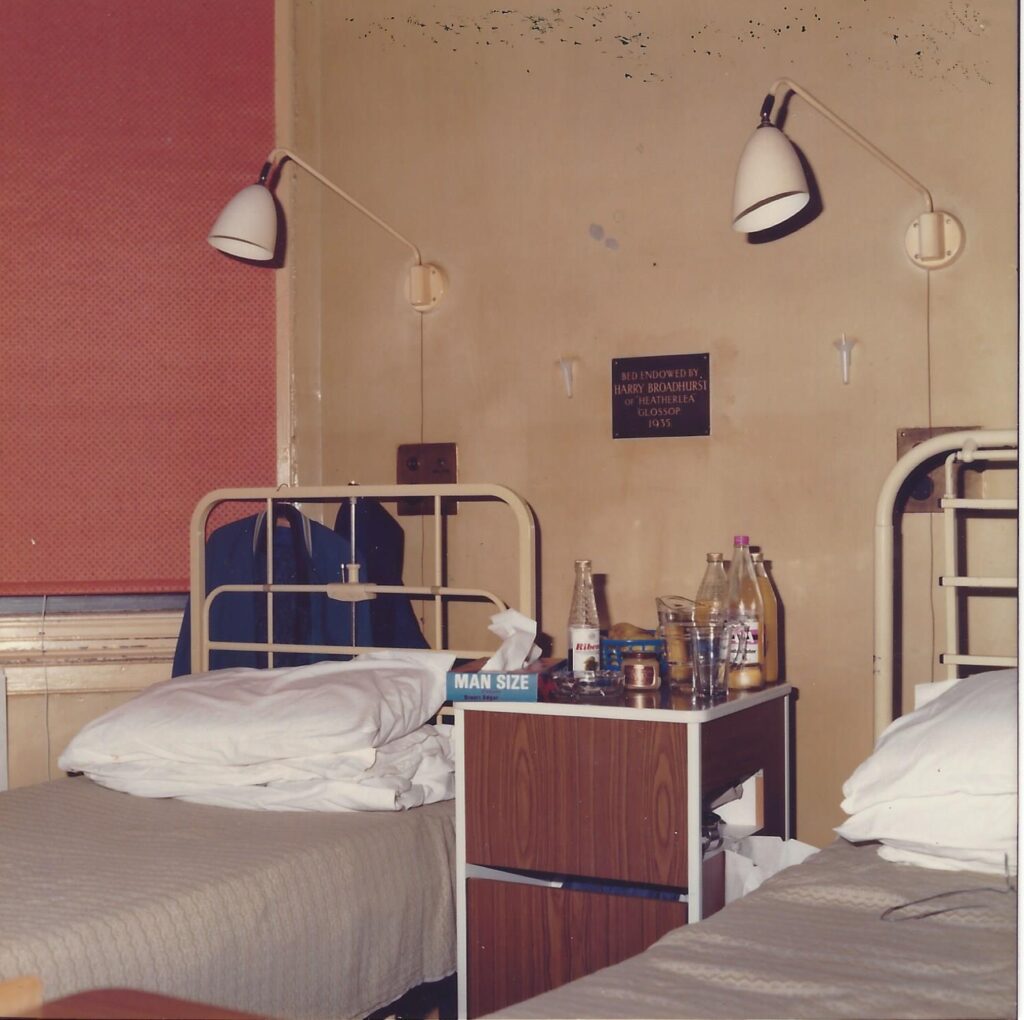
In February 1976, L. S. Lowry, the famous artist, was admitted to Woods Hospital and sadly passed away soon after while suffering from pneumonia. The wards in those days were still very much as they had been with the plaques for the sponsored beds and private rooms with a couple of beds at the side.
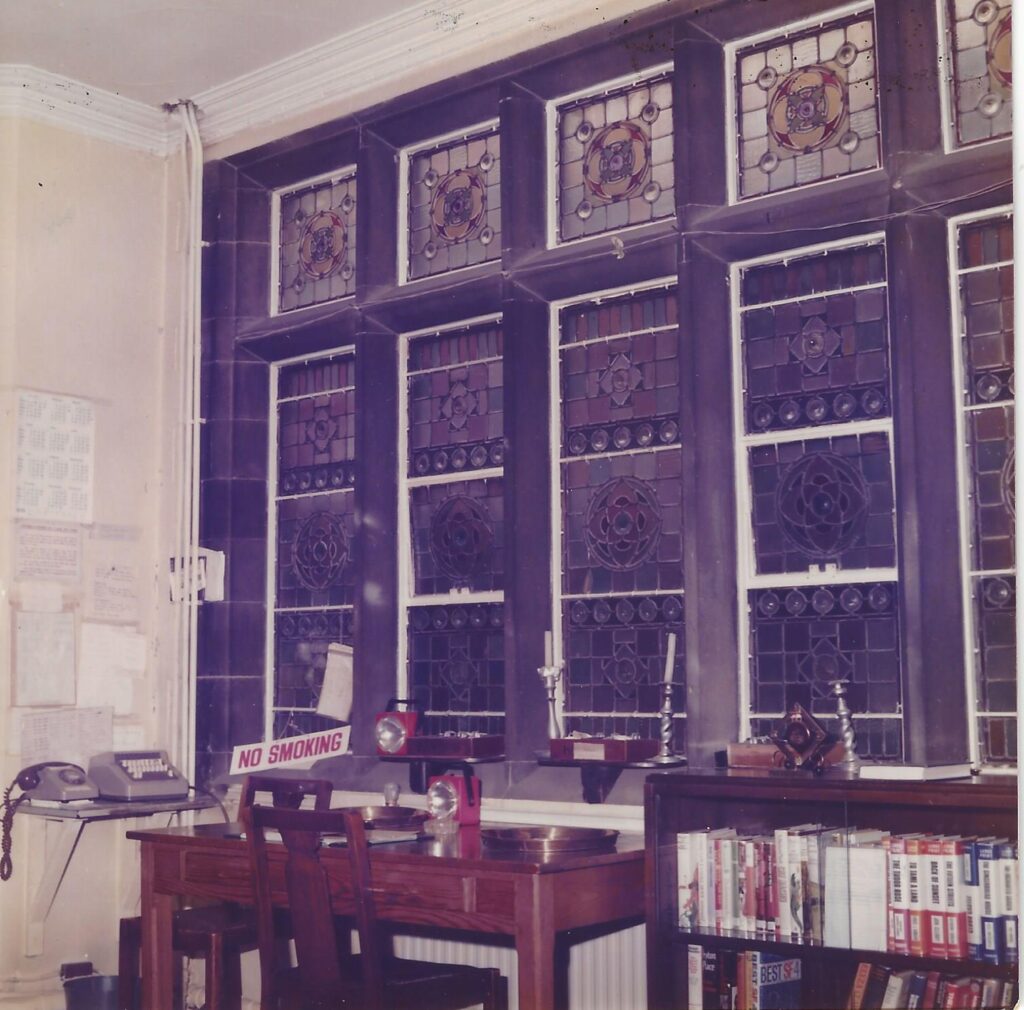
Closures and Later Uses
Woods Hospital had been threatened with closure on many occasions over the years. In 1979 it was closed for a period due to public service strikes. It gradually began to be used as a convalescent hospital for those who had spent long stays in Ashton Hospital.
On its 100th anniversary in 1986 it was declared that the hospital, as the local community knew it, would be closed. The hospital was to re-open as a centre to serve the elderly with mental health issues.
After two more years of fighting and protests, Woods Hospital closed in April 1988 and the GP beds and out-patients clinics transferred to Shire Hill Hospital (which closed in 2018). The hospital was upgraded, renovated, and refurbished and re-opened in June 1990 as a hospital for the elderly.
In 2001 Woods Hospital received a £758,000 ‘facelift’ in a phased conversion that began in 1999. The hospital remained a community-based hospital providing services for older people with mental health problems. It had facilities for in patients with two wards with 22 beds as well as a day hospital.
Final Closure
The future of Woods Hospital was again in doubt in 2009. It was decided the elderly patients being treated at Woods would be moved to a new 48 bed unit at Tameside Hospital. The day hospital remained open for a while, but this marked the final closure of Woods Hospital after nearly 125 years.
Reuben’s Retreat

Reuben’s Retreat purchased Woods Hospital on 23rd April 2014 as their forever home. The charity was formed after Reuben Michael Graham sadly passed away in 2012 from an aggressive brain tumour at the age of 23 months.
To ensure his life was not in vain, his mummy Nicola wished to create a legacy in his name. Reuben’s Retreat was started as a sanctuary, a place where families of children with medical complexities could holiday, a place of comfort, peace and tranquillity, a place where fun and memories could be made. It also supports families after the loss of a child.

After purchasing Woods Hospital, Reuben’s Retreat planned a 10 phase renovation. The first 6 phases are now complete. The building has been lovingly restored. Many of the original features have been retained and restored including the original roof slates and the solid wood flooring.
Fundraising is now taking place for the final 4 phases to complete the restoration of this beautiful building. You can follows Reuben’s journey on their website.

Sources
Many thanks to Reuben’s Retreat for allowing us to explore their building and keeping us up to date with their renovations.
GHT Archive: plan of Victoria Park, photographs
Glossop Chronicle, various dates
Derbyshire Record Office, D3700/14/1, Woods Hospital Committee minutes 1886-1892 (catalogue entry Original viewed 2017)