
This article was researched and written by Kate Raine in June 2026 and looks at the life of Robert Kershaw 1804-1864, Millowner, Teacher and Philanthropist.
Part 1 – Farming Ancestors
Tintwistle Independent Chapel
Robert Kershaw was born on 18 December 1804, the second child and only son of James and Judith Kershaw. Robert was baptised shortly after his birth at Tintwistle Independent Chapel.
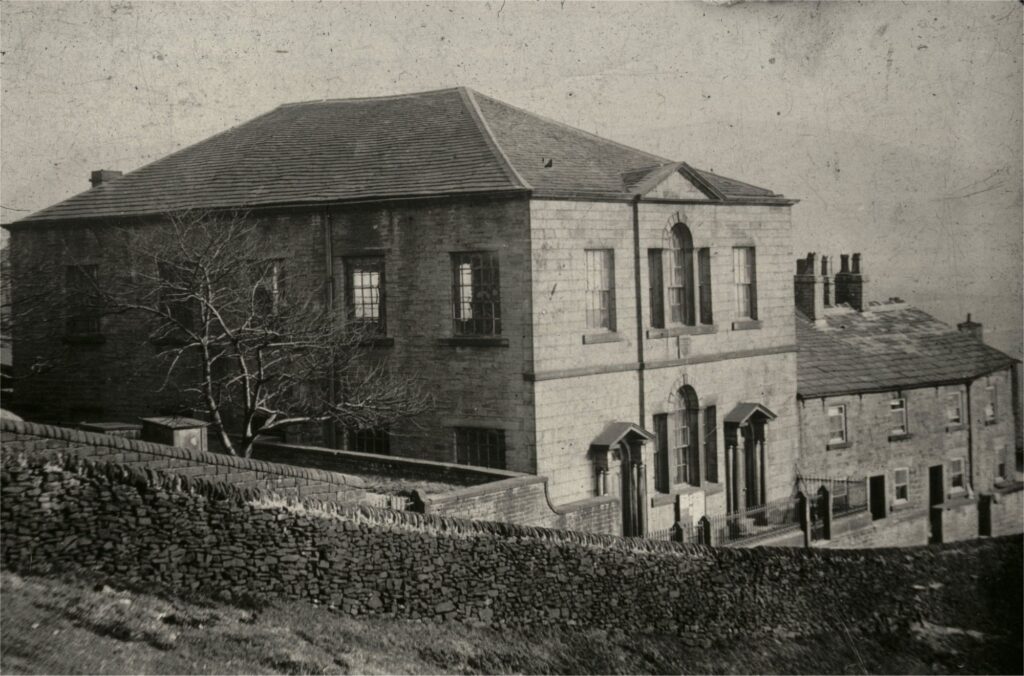
This was the church of his forefathers who were staunch Independents. The congregation at Tintwistle had been established in the 17th Century. They gathered in an old barn later building their first chapel at Chapel Brow in Tintwistle in 1763.
Robert’s great-grandfather, John, a yeoman farmer had left money to the trustees of the chapel in his will. The interest from these payments was used to fund a preaching minister for the chapel yearly.
Kershaw Forefathers
John Kershaw died in 1762. He was a yeoman farmer who lived in Hollingworth, but owned land and property in Newton in Hyde that he passed to his children.
His son, Samuel Kershaw, Robert’s grandfather, carried on in farming. He lived around Woolley Bridge. His children were born into the beginnings of the industrial age. His wife, Hannah Roberts, came from another big farming family, who would change the future of the Kershaw family’s fortunes.
Roberts of Deepclough
Hannah Kershaw, Robert’s grandmother, was the daughter of Joshua Roberts of Deepclough. The family owned Deepclough Farm, which was located between Padfield and Tintwistle, near where Vale House Reservoir is today.
The Roberts family owned property around Glossop and Saddleworth. Hannah had two brothers, Samuel and George. Samuel owned land around Mouselow and got involved in the new mill enterprises in the area.
George was a land surveyor, an amateur lawyer and accountant. Robert Hamnett described him as ‘a man of exceptional abilities…He was well connected and of considerable wealth.’

George was also a teacher. He was a school master at Tintwistle Independent School for 11 years during its beginnings in the late 18th Century. He then became the first schoolmaster of Whitfield Endowed School on Hague Street in Whitfield. The school was established by a rich clothier called Joseph Hague for the poor children of Glossop. The school was set up in 1779, and George was the schoolmaster for 21 years until his retirement in 1800.
Part 2 – From Farming to Industry
During his life as a land surveyor, accountant and teacher, George Roberts had purchased property around the Whitfield area. He passed away in 1804 at the age of 58. He had remained a lifelong bachelor and left most of his property to his nephews from his sister Hannah.
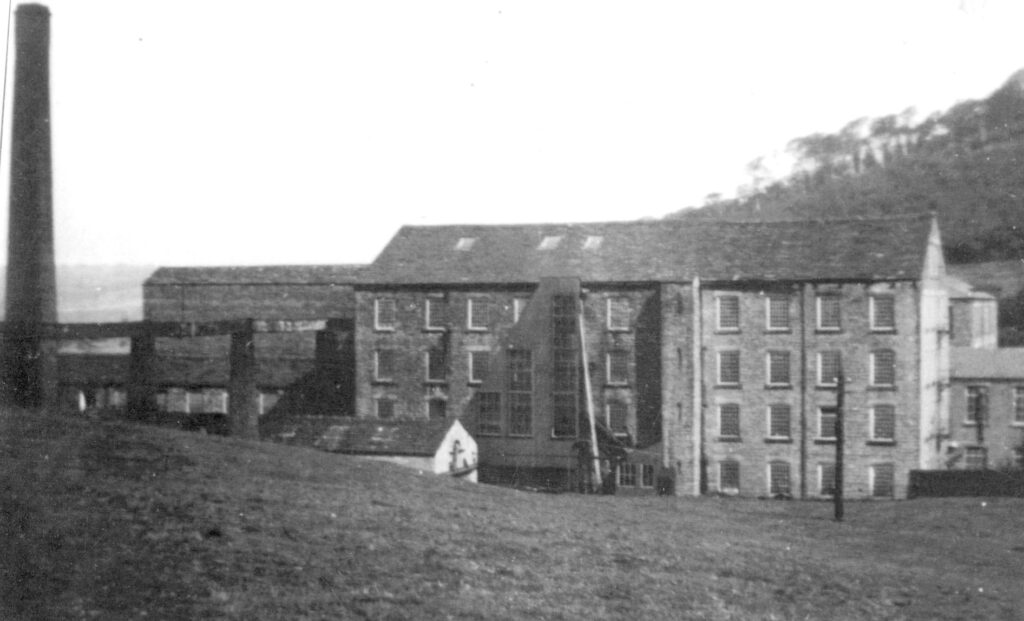
Hannah had married Samuel Kershaw and they had three sons, John, James and William and a daughter, Margaret who married Robert Atherton. In his will George left his share of a mill at Charlestown to William Kershaw. For a payment of £920 he left his nephews including John Atherton, the son of Margaret and Robert Atherton, Hurst Mill to be shared between the four of them. The siblings then made a series of partnerships to run the mills.
Machine Maker
Textile mills had sprung up around Glossop and Longdendale during the late 18th Century. James, Robert’s father, had become involved in this new industry as a machine maker. He worked with his nephew John Atherton, whose father Robert has died in 1802.
Charlestown Mill
In 1816, James and Judith moved their three children, Margaret, Robert and Mary to Charlestown in Glossop. Here James worked a cotton spinning mill with his partner John Wood of Hadfield, who lived at Thorncliffe Hall in Hollingworth. John was related to the Hadfield family that had set up mills in the area.
Hurst Mill
Over the years partnerships between the siblings were created and dissolved, but eventually each of the siblings settled on one mill. John Kershaw and his son, John, ran Hurst Mill. William Kershaw and his sons ran another mill at Charlestown. John Atherton ran the machine making business started by his father in Hollingworth until his death in 1833 when the works were sold.
Charlestown Mill Inherited
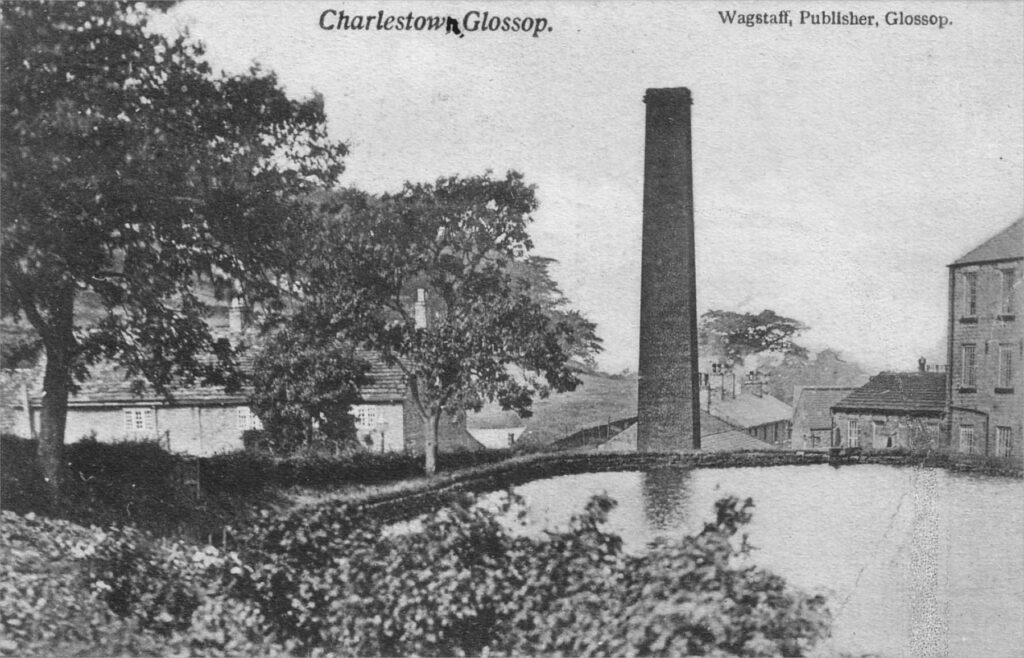
In 1836, Robert’s father, James, passed away. He left his estate to his three children, Margaret, Robert and Mary, with a part of the estate to be invested in shares to provide future income.
Robert was 32 years old when his father died. He took over the running of the mill with his business partner, James Bosley. James had been running the silk mill at Silk Street in Glossop since 1825. The mill made silk ribbon and thread. It closed in 1838 shortly after a robbery of 20-30lbs of silk thread.
Part 3 – Passion For Education
Robert, like his relations, had a passion for education. He had become a Sunday school teacher at the age of 18 and started holding bible classes.
Alongside his business he devoted his leisure time to educational projects. He assisted in teaching a night school for young men at Whitfield Wesleyan Church on Hague Street and taught at the night school at Littlemoor.
He worked with the Temperance movement with Mr Spencer, who was a school master and later an Independent Minister. Also he helped with a school set up in Padfield
Robert and his business partner, James Bosley, also worked together on educational projects. In 1842 James Bosley was involved in the letting of the old vestry room in Old Glossop for a day school and Sunday school connected with Old Glossop Parish Church. James eventually became the third schoolmaster of Whitfield Endowed School until his death in 1844.
Bleak House
In 1843 Robert’s mother, Judith, passed away. Robert decided to give up the mill business. He built a house on Victoria Street for himself and his two sisters, Margaret and Mary.
103 Victoria Street, later known as Bleak House, had two large rooms and a kitchen on the ground floor and three rooms and a box room upstairs. There was also a large outbuilding, which in 1907 was used as a lecture room, but could have well had a similar function when Robert and his sisters lived there.
Continued Education
Robert then devoted more of his time to education. He was involved in the Young Mens’ Association held at the Castle Hill National School in Old Glossop alongside others such as Mr Howe of the Vicarage, and Samuel Wood of Howardtown Mills in Glossop. The Association had been set up to provide ‘a means for instructing the young around them, and promoting education in various branches of useful knowledge.’
He also helped to found the Glossop Mechanics Institute with Mr Bannister and others from Castle Hill School. By this time Mechanics Institutes were being established across the country. They were often set up by members of the local community and were guided by local interests.

Robert was instrumental in the building of St James’ Church in Whitfield alongside others such as the Wood family and James Bosley. After moving to Victoria Street, he and his sisters had devoted themselves to education and charity work including the setting up of Whitfield Church Sunday School.
Part 4 – Whitfield Institute
Night School
In 1848 Whitfield Church School was built. In 1849 Robert set up a night school for young people at the school. On its first anniversary, 400 people attended a tea in celebration. The entertainments included speeches, recitations and examinations of mental arithmetic.
Whitfield Institute
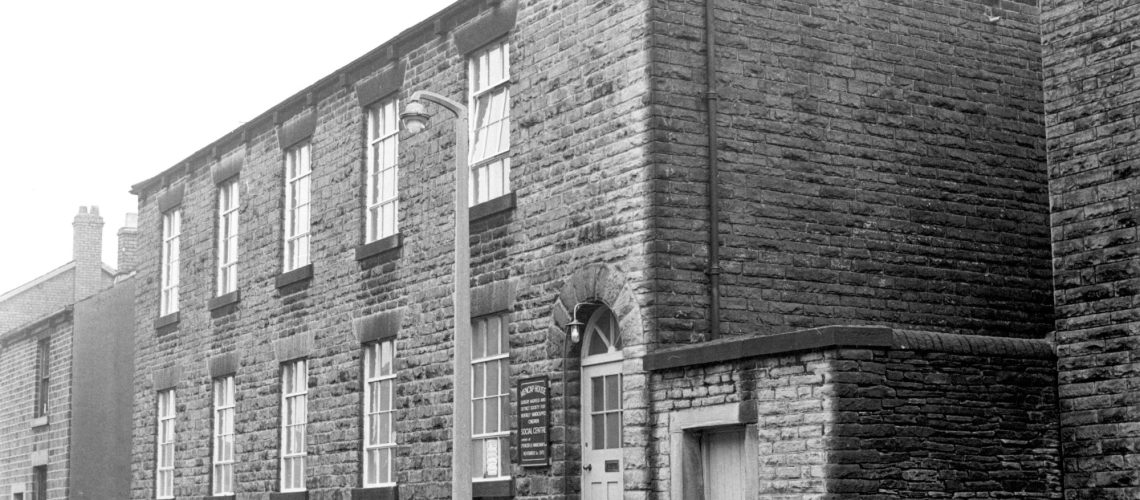
After a disagreement in 1858, Robert moved the night school to a temporary building elsewhere in Whitfield. He then set about building his own institution on Kershaw Street in Whitfield.
The cost of the new building was £400 and built entirely at his own expense. It was built of rock faced stone and consisted of two large rooms capable of holding 300 people. It also contained a library of over 900 volumes.
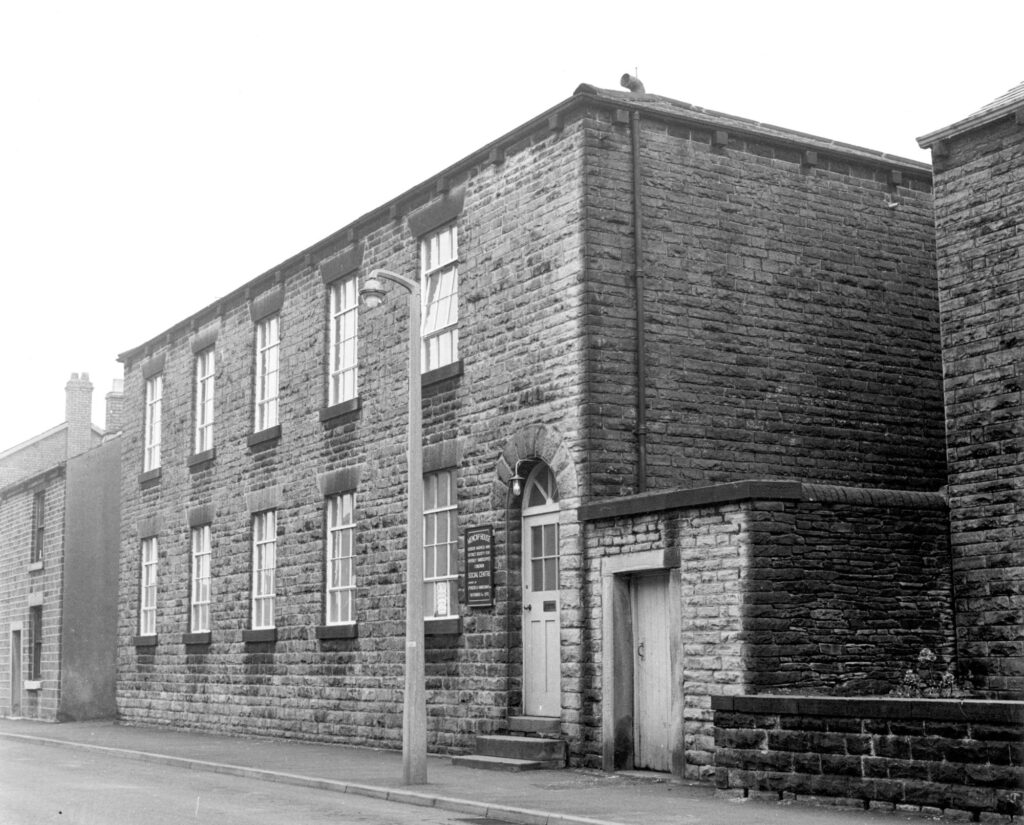
Initially it was called the Freetown Working Men’s Institute, but it has been known as the Kershaw Institute and Whitfield Institute.
During the early years Robert Kershaw was the principal teacher. His sisters, Margaret and Mary, were also teachers. The institute provided classes for men and women. In 1861 they had 144 ‘good paying members’.
The school taught classes on reading, writing, grammar, history, geography, theology, arithmetic and bible lessons. The Institute worked in partnership with the Society of Arts and the Lancashire and Cheshire Union of Institutes so pupils could sit examinations and gain qualifications.
Success Stories
The Institute produced many success stories. Noah Andrews, who lived on Pikes Lane was working as a warehouseman at the age of 16. After gaining a qualification in bookkeeping through the Institute he became a bookkeeper and cashier and eventually a company secretary for a paper company in the North East. A blowing room operative showed such promise in his elementary classes that he was invited to attend chemistry classes at Manchester University and was employed by an eminent manufacturing chemist as an assistant.
Memorial
In 1896 some of the founding members of the Whitfield Institute proposed to erect a memorial plaque in the building to Robert and his sisters to acknowledge their great achievements. The plaque is still in the building today, which is now a dental surgery.
Part 5 – Slatelands Cottage
In the 1860s Robert set about building himself a new home on Slatelands Road for himself and his sisters. There was an addition to the household of a young girl, Frances Mary Broadhurst, who had been adopted by the family after her mother had died.
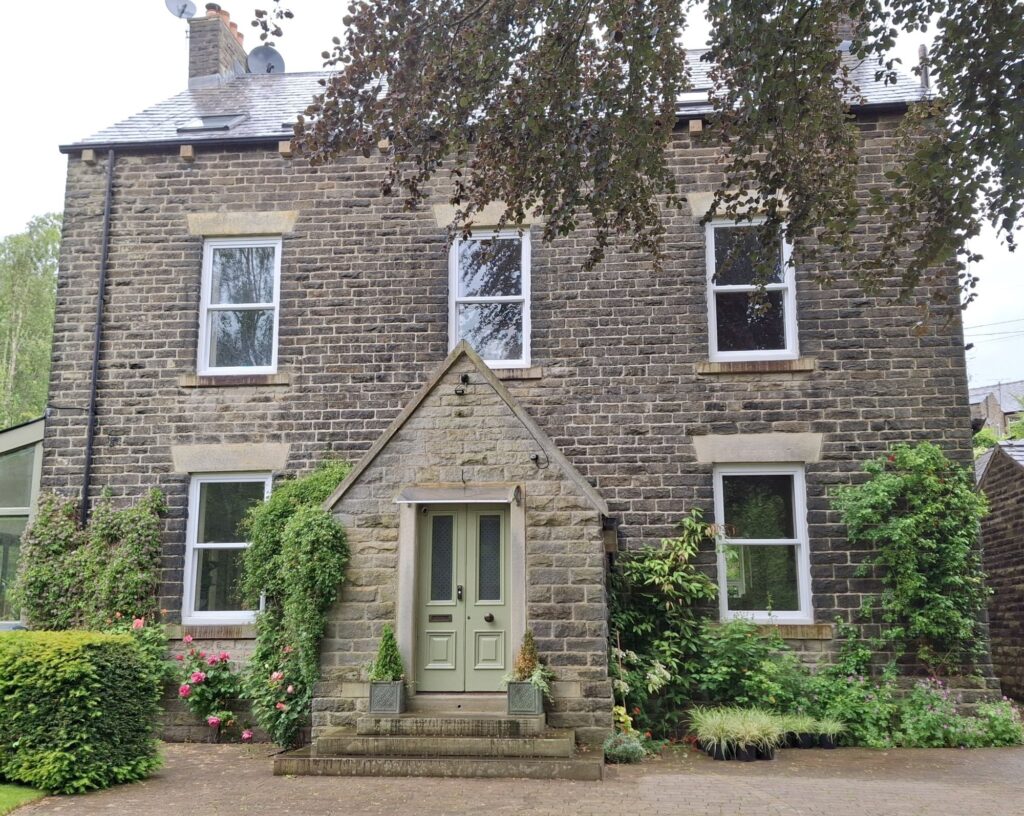
The new house was large but modest and unostentatious. An advert for the house in 1881, when it was sold by the family describes the house as ‘…consisting of a dining room, drawing room, store room, large kitchen, tiled lobby and two excellent cellars.
Upstairs were four bedrooms, a large attic adapted for four bedrooms and excellently fitted. The rooms are lofty and some neatly corniced. The interior fixtures are of superior quality and the shutters and outside door are cased with iron.
The outbuildings comprise a good wash house, coal house and joiner’s shop. The house is extremely well built and stands on a warm sheltered sunny slope commanding a view of the Simmondley Hills.’
The family moved to the house in September 1862. Robert enjoyed less than two short years in the house when he passed away on 13 January 1864.
A Great Loss
On his death there was an outpouring of grief for the great loss felt by Glossop. It was said ‘Few men had a larger circle of private friends and few men died more universally regretted…His labours as a teacher extended over a period of 40 years and have been eminently successful… His whole career was one of usefulness and activity, hourly and daily engaged in beneficial labours. Whatever he took in hand he strenuously persevered in. He laboured unceasingly, yet unostentatiously…He was respected by all classes and men of every creed. He knew no distinctions nor acknowledged any social differences.’
Tintwistle Independent Chapel
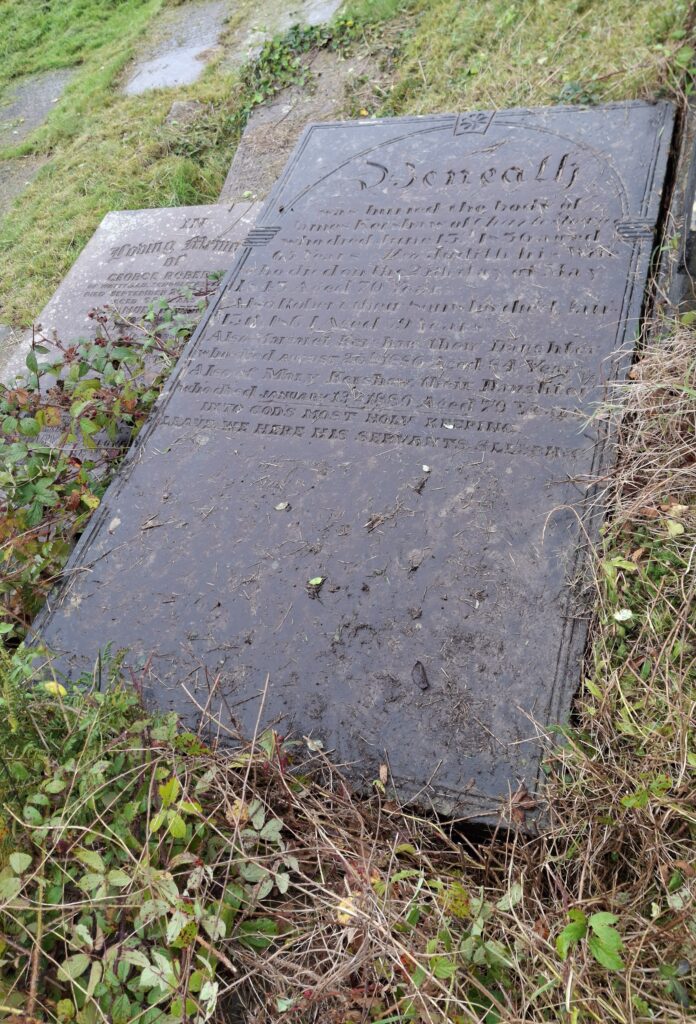
Robert’s story ends where it began. He now lies in a grave with his parents and sisters in Tintwistle Independent Chapel graveyard. They are surrounded by their kinsmen including George Roberts and Samuel and Hannah Kershaw.
Slatelands House – Later History
The sisters carried on at the Whitfield Institute after Robert’s death. They lived in the Slatelands Cottage with their adopted daughter Frances until 1881. They then moved to Birkdale near Southport where they lived out the rest of their days.
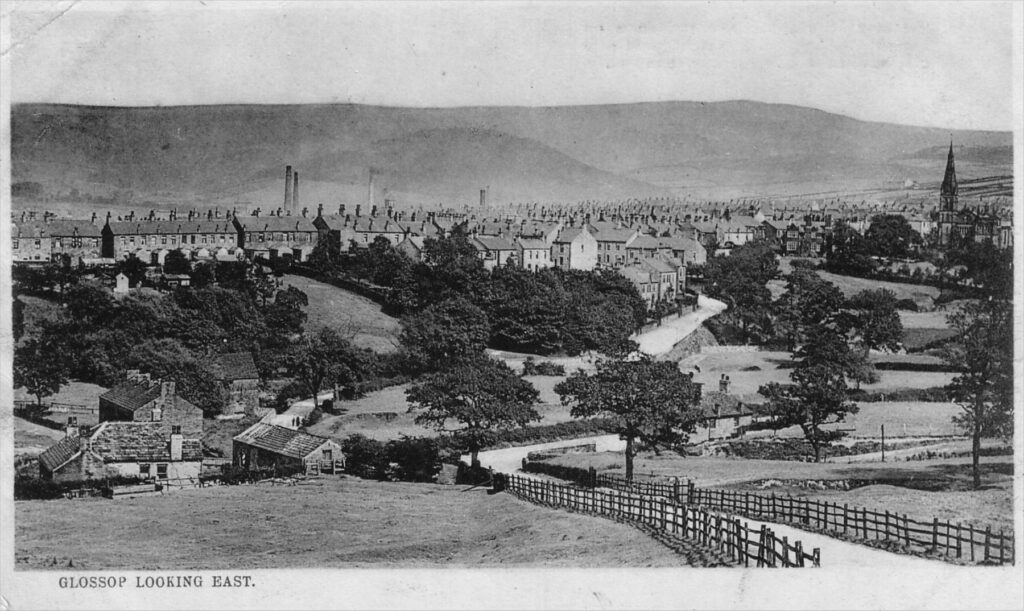
The house was then sold to the Booth and Band family who were silk dealers. The house was uninhabited at the beginning of the 20th Century, and became hidden by a mass of trees. By 1911 the house was purchased by local solicitor, Percy Ireland, who was still there in the 1939 Register.