
After experiencing the massive snowfall at the beginning of World War Two in 1940; Glossop was again struck by another natural disaster in 1944. A storm started at about 4.30pm on May Bank Holiday, 29th May 1944, with rain, thunder and lightening and hailstones as big as marbles. A cloudburst dropped 6 and half inches of rain in an hour, between 6-7pm, this was equal to the total rainfall of March and April.
The vortex of the storm seemed to be above Peak Naze, Low Moor and The Nab. Torrents streamed down from the hills and swept through every part of the town causing extensive damage. For a time, there was no way out of the town.
Civil Defence
 |
 |
| A.R.P. Mobile Kitchens in Charlestown and Dinting | |
The civil defence services were called out. The National Fire Service pumped water out of buildings. Rest centres were opened for those that could not return home. People were supplied with clothing and coal. Mobile canteens were set up to supply people with food.
Damage in Old Glossop and Glossop
In Old Glossop, the water swept into the Wesley Chapel and around the Old Cross. The Queen’s Arms carried on serving even when the water had reached knee height. The customers pulled their feet up onto the bench and could hear the barrels hitting the ceiling of the cellar. Hawkshead House was badly hit as well, with its furniture being carried across the lawn.
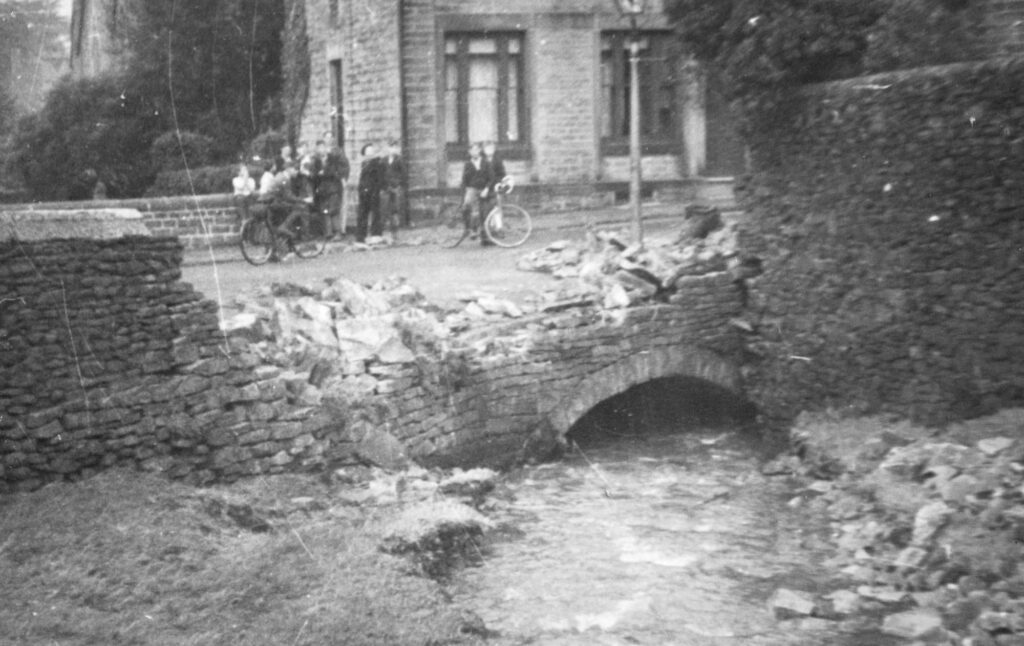
Bridges were washed away, so was the rose garden in Manor Park. Many houses were damaged. The water on High Street West rose to several feet and washed away a house and Grab Alley Bridge. It was here that the only recorded death occurred, when Mrs Jane Ann Bridge went to look at the flooding with her sister in law and the bridge collapsed and she was carried away in the flood waters.
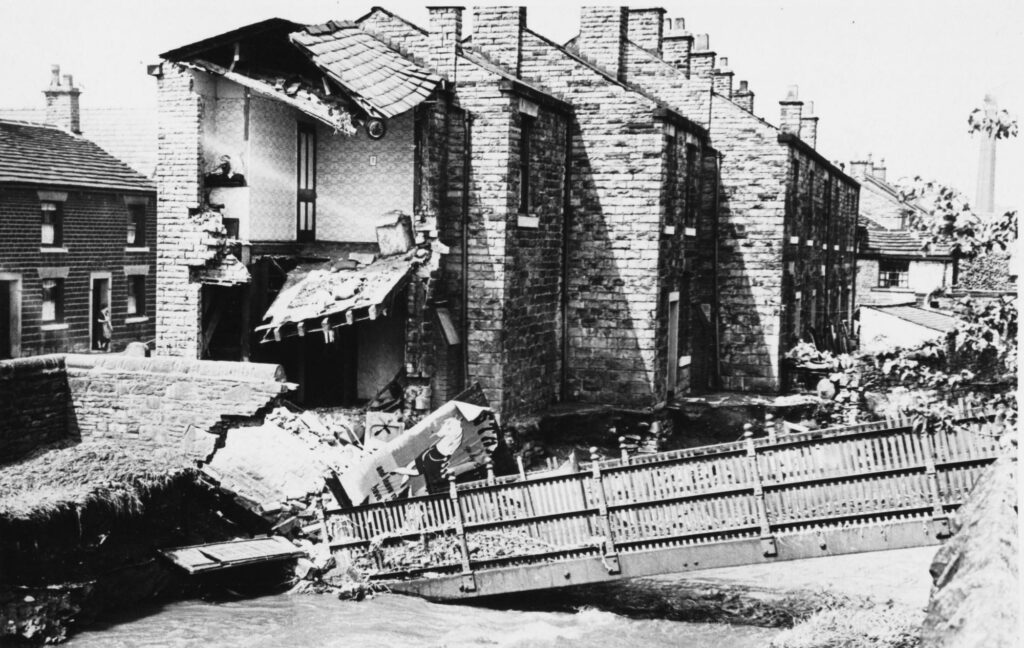
Both Sumner’s and Wood’s Mill suffered damage. At Sumner’s Mill this was just to goods and machinery. At Wood’s Mill some of the buildings were washed away. In the Long Mill, those working in the Admiralty worked hard to move all the equipment to the upper levels, which was a massive undertaking.

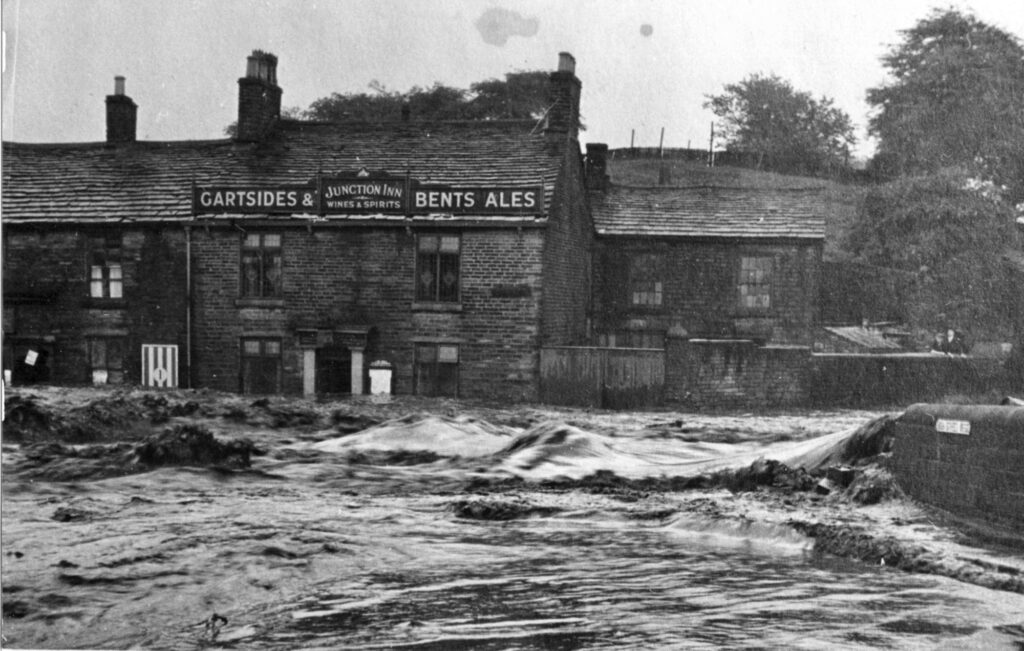 |
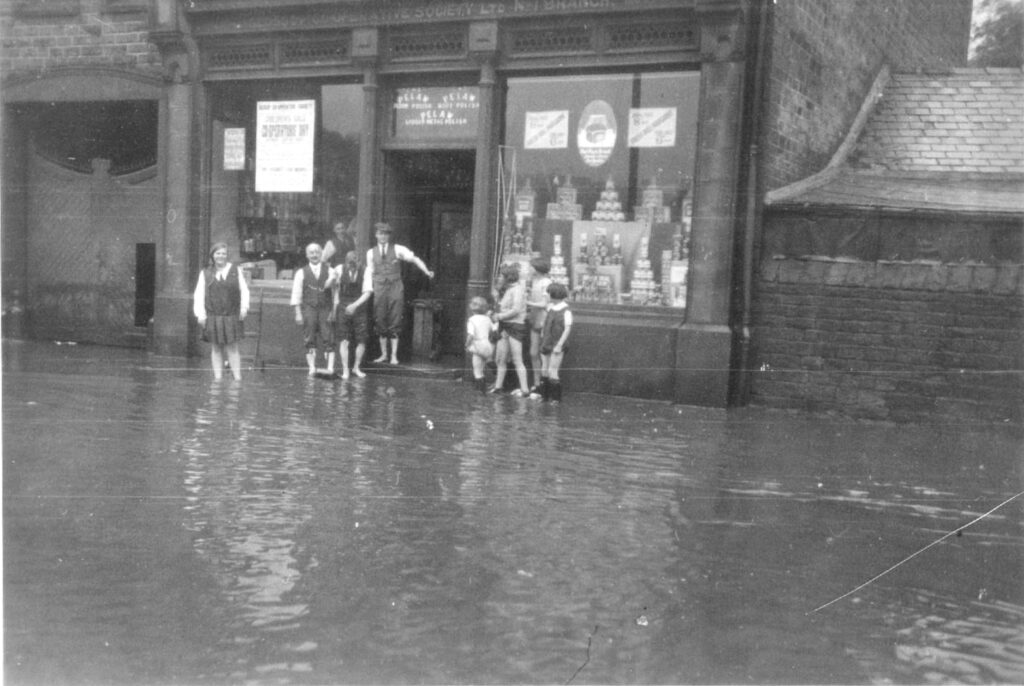 |
| Scenes at the Junction Inn and the Co-op at 369 High Street West, Glossop | |
Long Clough Brook
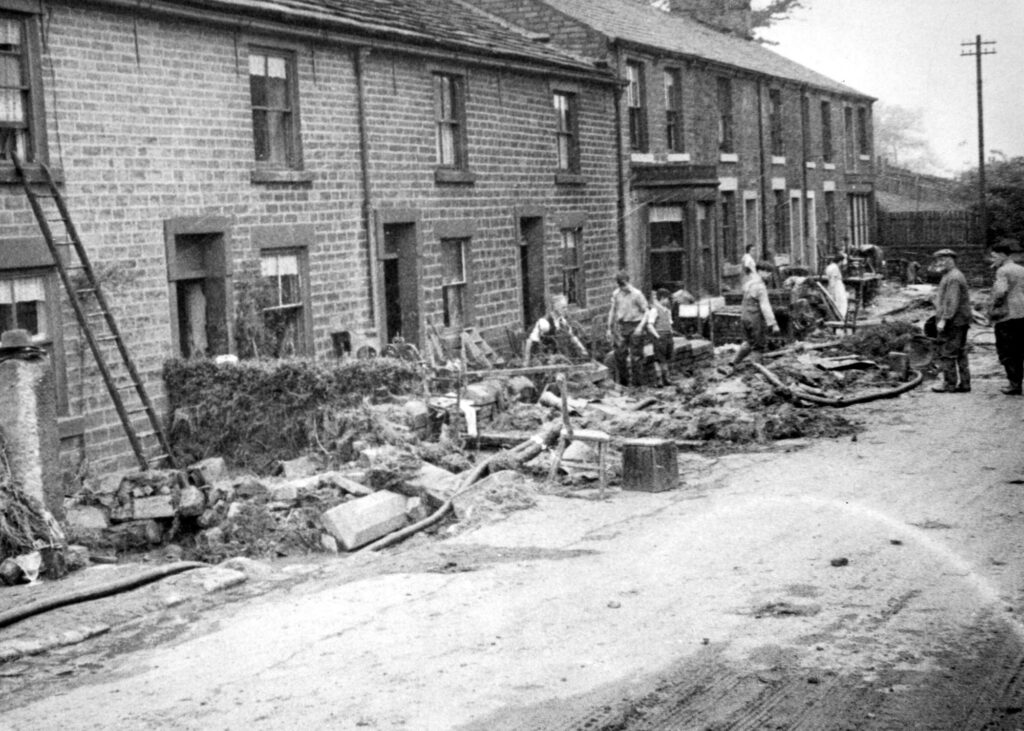
Much damage was caused by water that flowed down from Chunal. At John Walton’s Bleachworks the water carried machinery out of the factory. The water flowed like a torrent down “Chemic” (Long Clough) Brook.
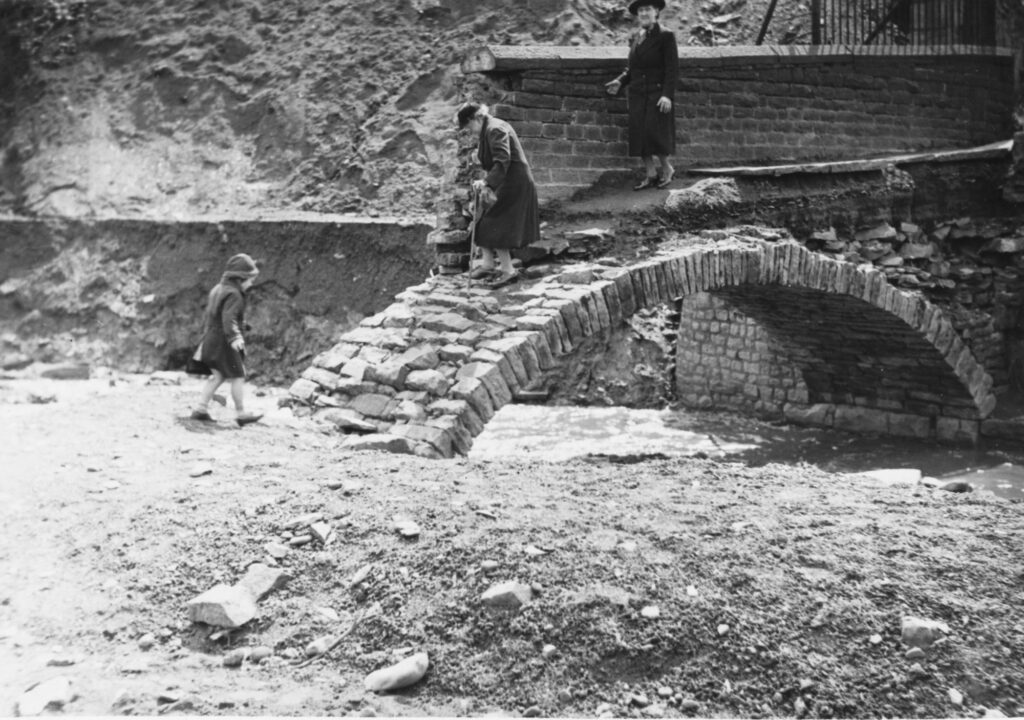
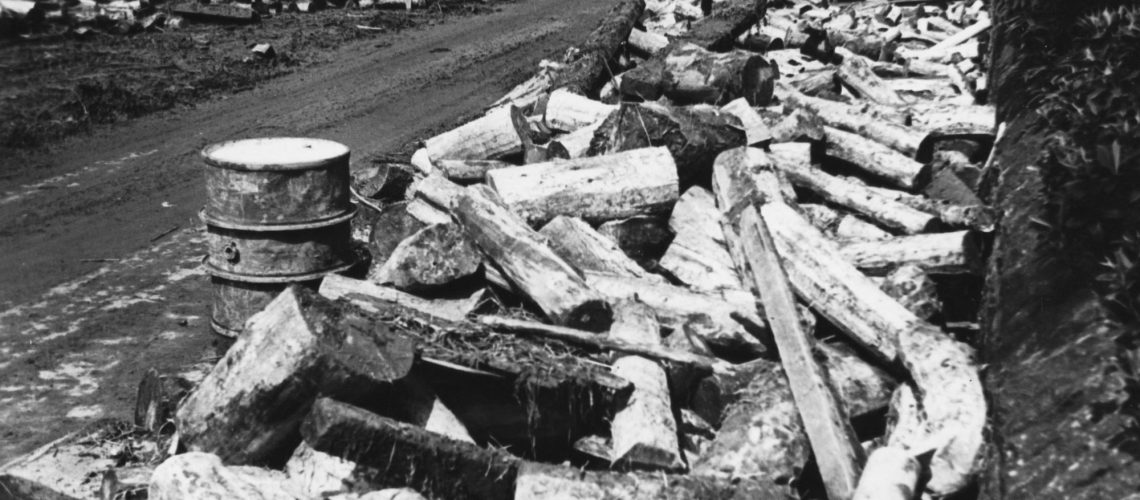
It swept through Turn Lee paper mill and carried the store of logs with it, all through Bridgefield, Dinting and Brookfield, with some even ending up in Stockport. In Dinting Lodge Cottages, Mrs Bridge narrowly escaped drowning by climbing on the roof of her house, while her husband was rescuing the pigs from Dinting Printworks Pig Club (all 14 survived).
 |
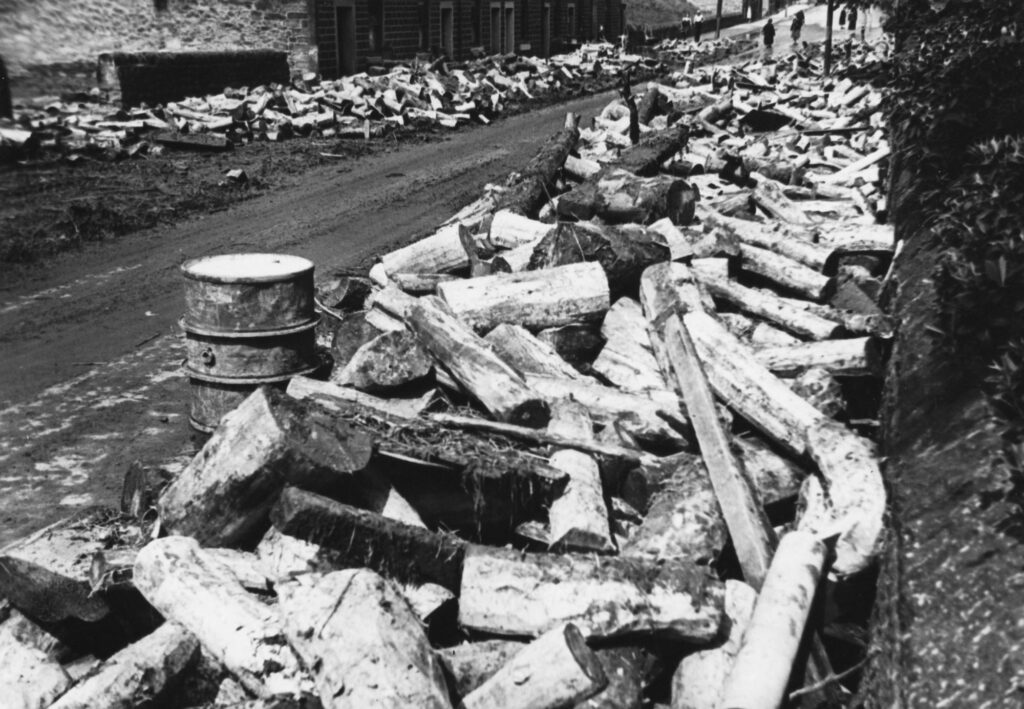 |
| Logs from Turn Lee carried down to Dinting Vale | |
The electricity supply failed during the storm and the railways and roads were blocked. Cars found a way out of town past the cemetery and down to Woolley Bridge. The railway service resumed at 10.15pm, but the electricity supply not until 11.30pm.
There were estimates that the damage caused was between £100,000 and £200,000. The Mayor set up a relief fund immediately after the disaster, but the effects of the flood were felt for several years after.