
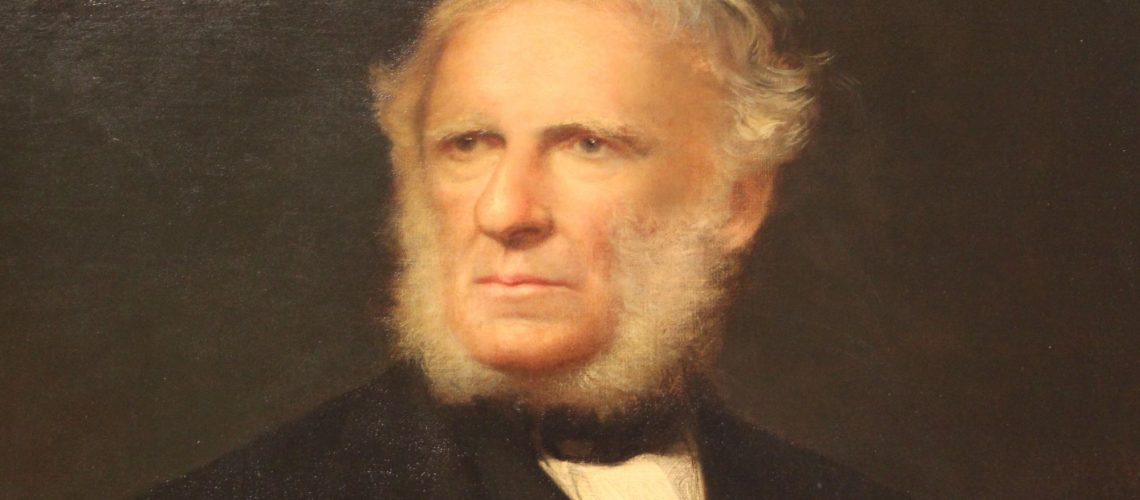
MP, FRS, Calico Printer and Philanthropist

“His high moral tone, his gentle bearing, his refined tastes and his good common sense secured for him the respect and esteem of men of all shades of politics, while his pure and simple life and his unostentatious benevolence gained him the love and admiration of a large circle of friends.”
Obituary, The Times, 29 October 1883
Unitarian Family
Edmund Potter was born on 25 January 1802 to James Potter and Mary (nee Moore). He was baptized at Cross Street Chapel in Manchester on 5 April 1802.
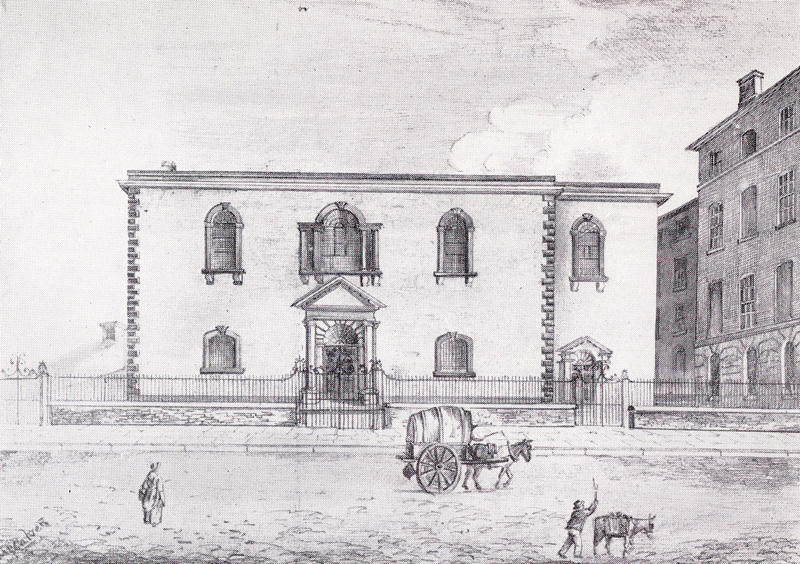
The Unitarian Chapel at Cross Street still exists today on the same site. Edmund was born into a very committed Unitarian family, as many of the manufacturing families in Manchester were at the time.
Unitarianism is a non-conformist religion that developed in the 17th and 18th Centuries. The Unitarians believe in the unitary nature of God and that Jesus was a prophet, inspired by God, but not God himself.
They held ideas that people are responsible for their own choices and should work towards self-improvement. Prominent Unitarians, such as Harriet Martineau, discussed ideas about social duty and that social education could bring about social change. These ideas and attitudes can be seen throughout Edmund’s life.
A Sound Education and a Severe Apprenticeship
Edmund spent his childhood in Ardwick, in an exclusive residential area known as The Polygon. His grandfather, John Potter, had been a Merchant and owned extensive property in Ardwick. John died in 1799; three years before Edmund was born.
James Potter, Edmund’s father, was a Yarn Merchant during the emerging cotton industry. Edmund had one brother, Sydney, and several sisters.
Edmund said his father gave him a ‘sound education and a severe apprenticeship’. He worked 15 hours a day during his early youth and this taught him habits of application and industry.
James Potter died in 1821, at the age of 45, from ‘decline’ and is buried in Rusholme Road Cemetery. This had just been opened, as the Dissenters’ burial ground (It is now a public park called Gartside Gardens; the remains of those buried there lay under the park).
William Gaskell
In her book on William Gaskell (1805-1884), Barbara Brill relates how Edmund Potter and his brother Sydney became friends with William Gaskell during their time as students at Glasgow University. Glasgow was a popular choice for study, as Dissenters were barred from Oxford and Cambridge Universities.
Edmund never graduated from university. His father died when he was 19 years old. He then lived with his mother on Oxford Street, Manchester, presumably with his younger siblings.

After graduation, William became the Minister of Cross Street Chapel in 1828 until his death in 1884. He was also Chairman of the Portico Library for 56 years from 1849.
Edmund and William’s friendship lasted their entire lives. William would often holiday with the Potter family in Scotland (without his family) and was a frequent visitor to Dinting Lodge.
The friendship spread across the family. William was the husband of the renowned novelist Elizabeth Gaskell. She was good friends with Sydney’s wife, Louisa, who was a frequent visitor to the Gaskell home on Plymouth Grove, Manchester. In later years William was a close friend and tutor to Edmund’s son, Rupert and his daughter, Beatrix, who talks about him fondly in her journal.
Boggart Mill
In 1825, at the age of 23, Edmund was persuaded by his cousin, Charles, to join him in the print trade. At his retirement he related he had “…left a good position in Manchester, one which he often thought if he had remained, he would have been in a better position than he was now”.
The ‘two young inexperienced men’ purchased Lower Simmondley Mill in Dinting that had been built in 1817. It had never been worked and remained empty on a lonely stretch of road. It was known locally as ‘Boggart Mill’ and believed to be haunted, as a family of owls lived there and hooted throughout the night.

Edmund and Charles got to work in ‘a humble way’. They were well connected and had a good footing in the Manchester market. Charles lived near the factory in Dinting Vale House and Edmund remained in Manchester working on the business there.
Early Struggles
Their first years in business were a struggle. Pretty much every aspect of the print trade was taxed including soap, dye and the final printed product. Edmund knew they would not survive in the trade if the print duty remained.
This led to his first experience in politics. He joined other first class printers to go to London to try to get the duty repealed. This included his friend, James Thomson, Calico Printer at the Primrose Works near Clitheroe. After a short campaign the duty was repealed in 1831.
Success was short lived, as in the same year the firm failed. This was put down to the failure of a connected firm, Potter, Maude & Co. in Darwen. Edmund’s uncle John, Charles’ father, owned the firm in Darwen. Upon the failure Edmund and Charles parted ways. Charles returned to Darwen and worked as a Calico Printer before setting up a successful wallpaper printing company.
Edmund Potter believed he could make the business a success and decided to carry on with the Works at Dinting Vale alone. Assignees were appointed to help bring the firm out of debt.
Assignees
The first assignee was William Sidebottom of Etherow House. He was one of the brothers that owned Waterside Mills in Hadfield, near Glossop. At this time Waterside was the largest cotton mill in the area. It produced coarse grey calico that Potter would then print on at his Print Works in Dinting Vale. Calico was a particular weave of cotton. Thus Edmund ensured a steady supply of calico to his Works. The printed calico was then used as fabric to make dresses.

Cotton production had expanded greatly in Glossop during the 1820s with the introduction of the power loom. Other firms in the area that supplied Potter were the Wood family at Howardtown Mills (who were connected to the Sidebottoms by marriage) and Francis Sumner at Wren Nest Mills.
Copper Rollers
The second assignee was Rupert Ingleby. He appears in the 1841 census as a smelter of ore. In trade directories he is a partner in the Cheadle Copper and Brass Co. and an agent for copper roller makers.
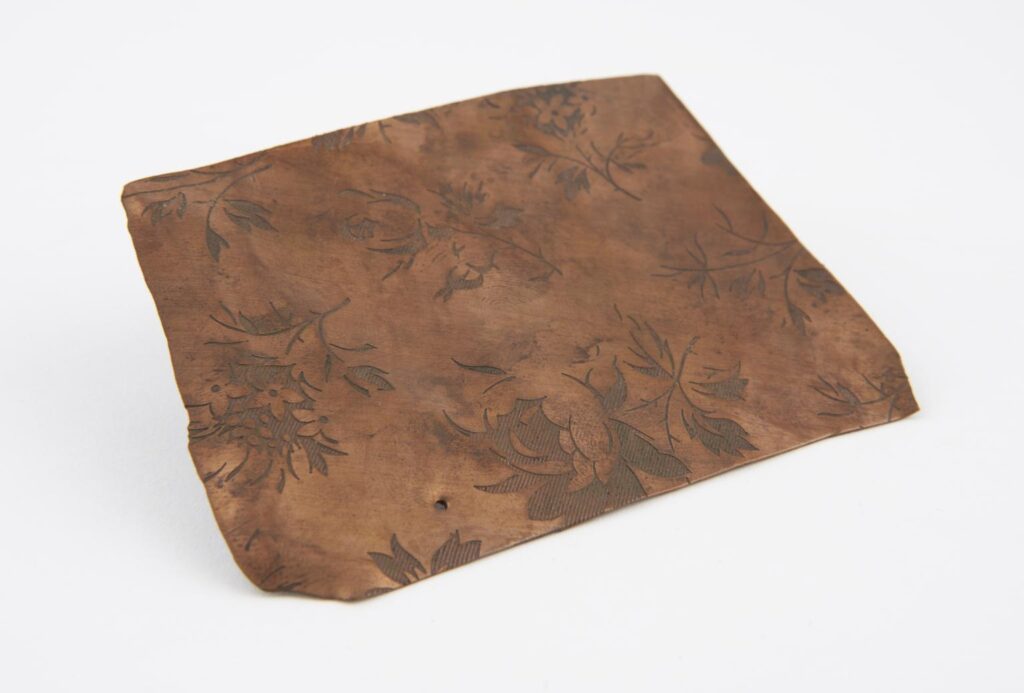
Traditionally calico printing had been done by hand with wood block printing. Some firms such as James Thomson’s Primrose Works in Clitheroe had begun to experiment with copper plate printing and later printing with copper rollers.
In the inventory of the bankruptcy of Potter, Maude & Co. in Darwen, there were listed copper roller machines. It is clear Edmund believed copper roller printing would be a key to his success.

D1589/2/3 Pattern Books of Edmund Potter & Co (photo courtesy of Lauren Riley)
In the 1841 and 1851 census of Glossop, many of the calico workers had been born in Darwen showing that Edmund brought the workforce with their knowledge of machine printing to Glossop.
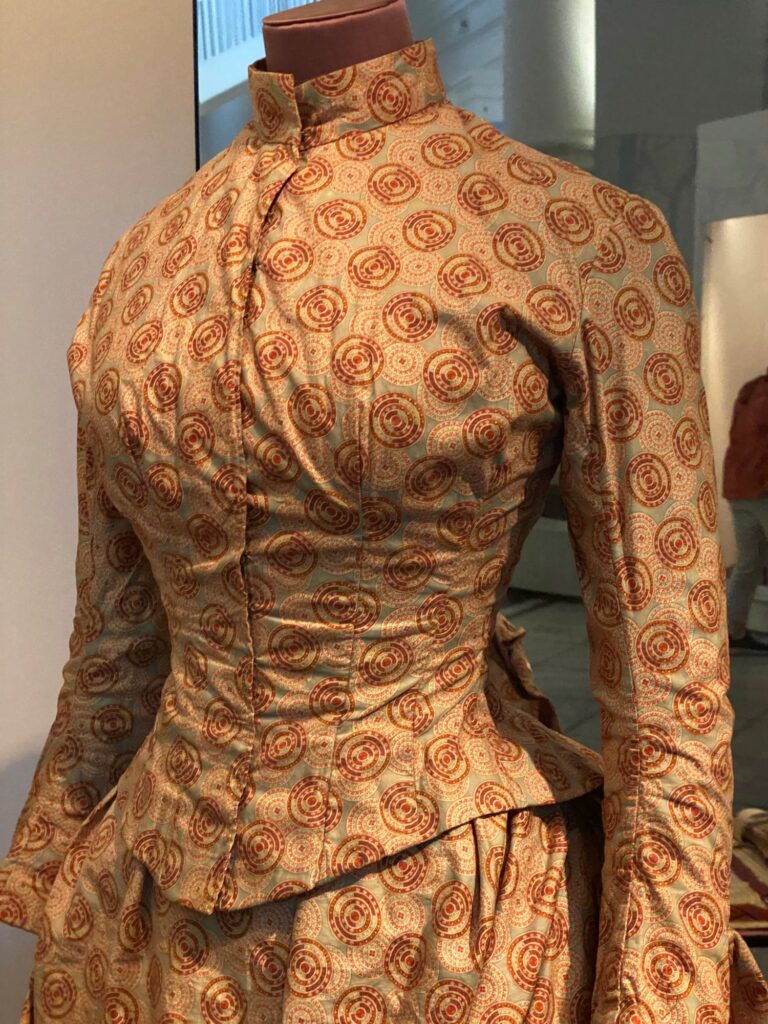
In these early years, Edmund left the running of the Dinting Works to some very able managers. Mr Townley and Mr Buckley both retired in 1865 after many years’ service. Mr Townley had worked himself up from humble beginnings to a Manager of the Works.
Fountain Street
The third assignee was Samuel Pullein, a Cotton Merchant with a warehouse on Fountain Street in Manchester. The first warehouse for Edmund Potter & Co. was at 4 Fountain Street, Manchester in the 1830s.
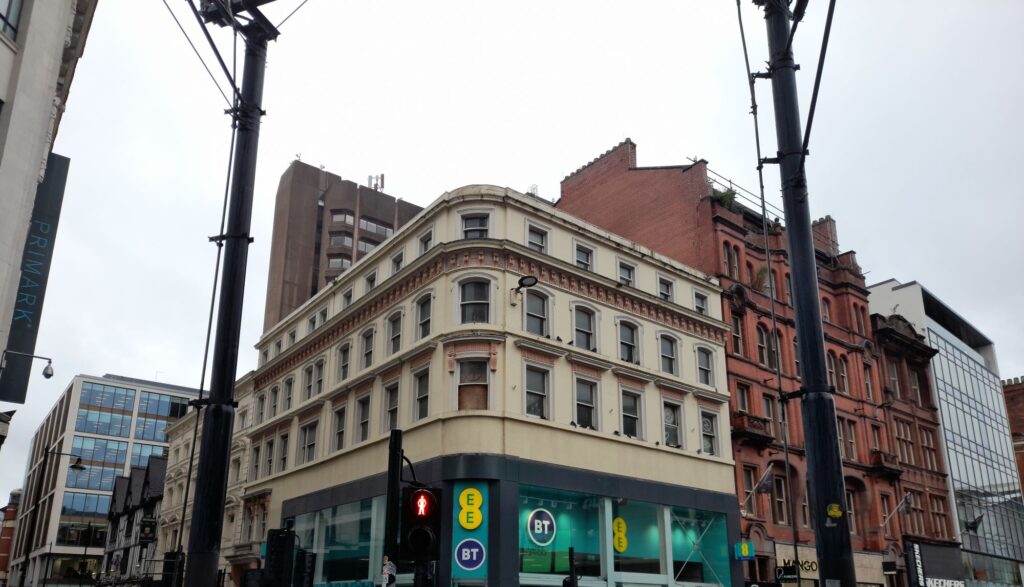
The three assignees show Edmund had a very clear plan for his business and the right connections. In 5 years, he cleared the debt and repaid £24,000 (over £1.5 million today) to his creditors.
This was a remarkable achievement. In celebration a presentation was held at Palace Inn, Market Street, Manchester (just opposite Fountain Street and now under the Arndale Centre). Edmund was presented with a massive silver salver with his achievement inscribed upon it. The assignees received smaller silver salvers.
This silver salver obviously meant a lot to Edmund, as it was passed to his son, Rupert. It was then passed in Rupert’s will to his son, Bertram. (Author’s note – After Bertram’s death I have been unable to trace where the silver salver ended up.)
Manchester Culture
The Potter family were involved in many of the cultural institutions of Manchester.
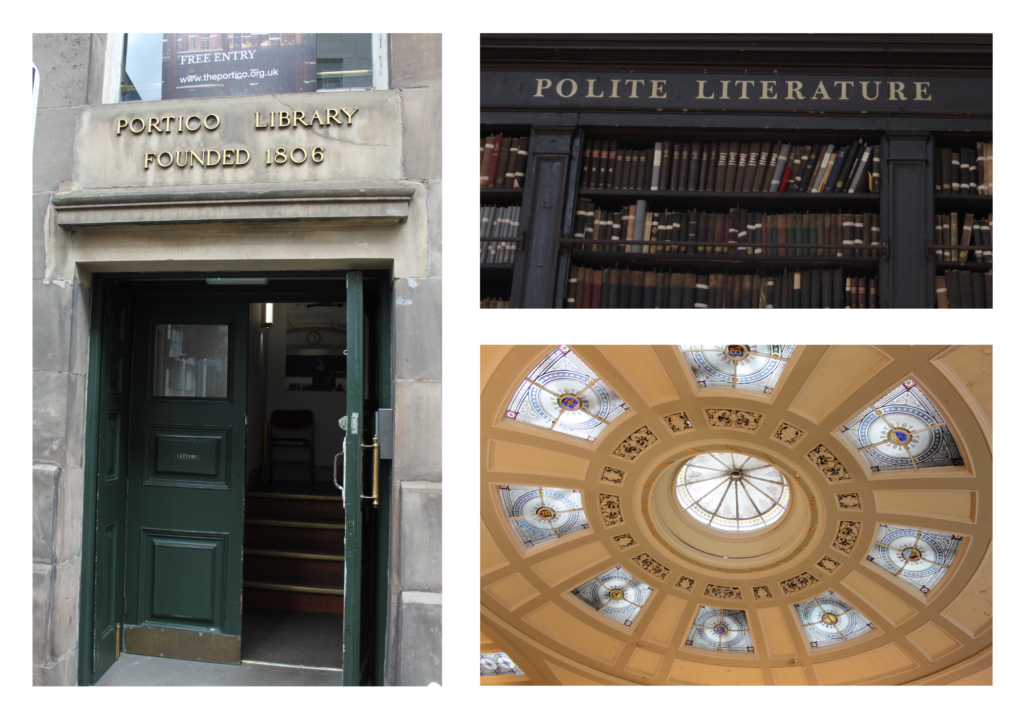
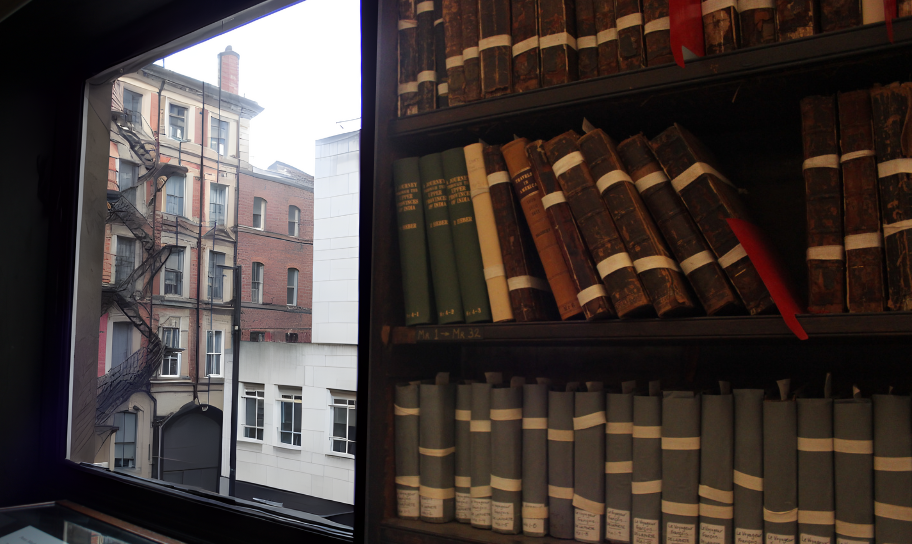
Edmund’s father, James, was a member of the Portico Library, maybe from its foundation in 1806. The Portico Library, Mosley Street, Manchester was a subscription library and newsroom that also served lunches. Its collection of 25,000 books reflects the men and times that built it. Edmund became a member of the Portico on 22 April 1822. His brother, Sydney, became a member three years later.
James had also been a member of the Manchester Literary and Philosophical Society, which began in 1781. The Lit and Phil, which still exists today, is a learned society that challenges opinions and makes you think. Edmund followed in his father’s footsteps and joined the Lit and Phil on 21 April 1826.
Family
On 3 October 1829, Edmund married Jessy Crompton, daughter of Abraham Crompton of Lune Villa, near Lancaster. The wedding took place at the Lancaster Priory Church of St Mary. Jessy was known as the ‘lovely harpist of Lune Villa’ and later the ‘pretty radical’.
Edmund set up home for his family in Manchester. Their first house was on the site where Owen’s College now stands on Oxford Road, Manchester. This is where their first child, Edmund Crompton Potter, was born in 1830.
They then moved nearby, to Exmouth Terrace (196 Oxford Road), Manchester. These were newly built houses offering a ‘desirable residence for genteel families’ and ‘sleeping accommodations for a large family’. Here were born Clara (1831), Rupert (1832), Walter (1834), William Henry (1835) and Mary (1837).
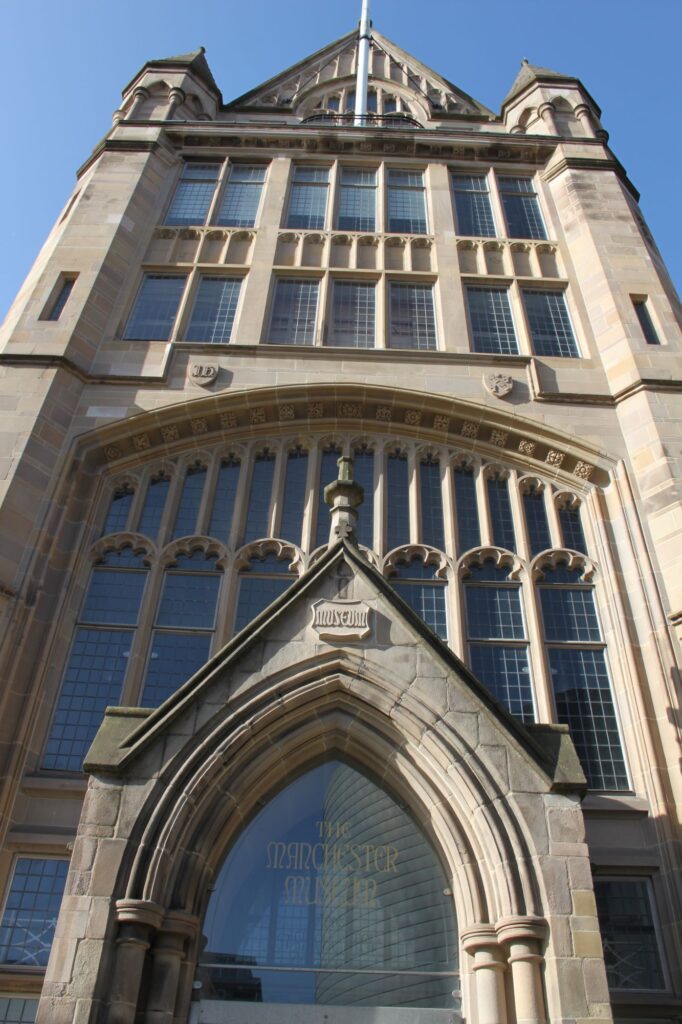
In 1839 they moved to a larger house on Gore Street, Greenheys, Manchester. Here their youngest child, Lucy, was born in 1840.
Edmund would regularly travel to Dinting on his gig (two wheeled cart) to manage his business there.
Ardent Supporter
In his Times Obituary, Edmund was described as an:
“Ardent supporter of every philanthropic and educational movement, both scientific and artistic in his native city”
Obituary, The Times, 29 October 1883
Edmund was on the committee and one of the first directors of the Manchester Athenaeum. This was established in 1835, ‘for the advancement and diffusion of knowledge’.
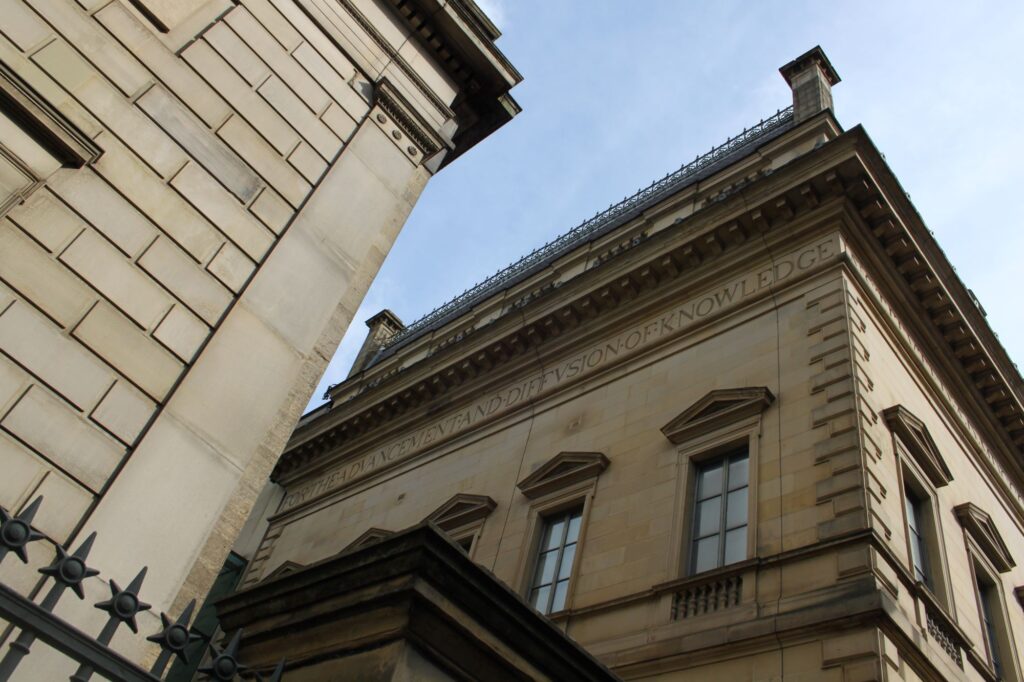
It moved to a new building designed by Charles Barry, architect of the Houses of Parliament, London in 1837. The new building contained a newsroom, library, lecture hall and coffee room. This was a place of learning with games of draughts and chess, but no games of chance.
The Athenaeum was subscription based and many members were Manchester manufacturers.
Royal Manchester Institution
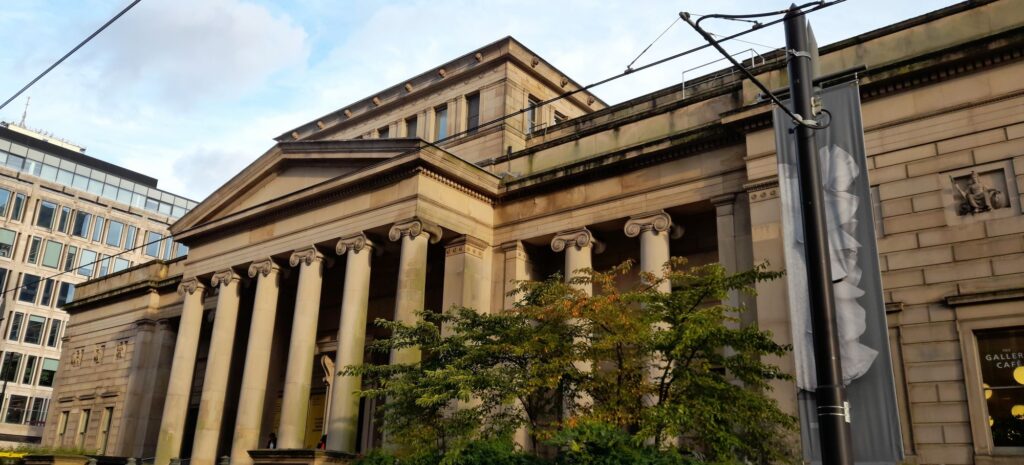
The Royal Manchester Institution was founded in 1823, as a learned society by a group of Manchester Merchants. It was housed in another building designed by Barry on Mosley Street, Manchester.
It held art exhibitions and promoted the arts and there was a laboratory in the basement.
School of Art
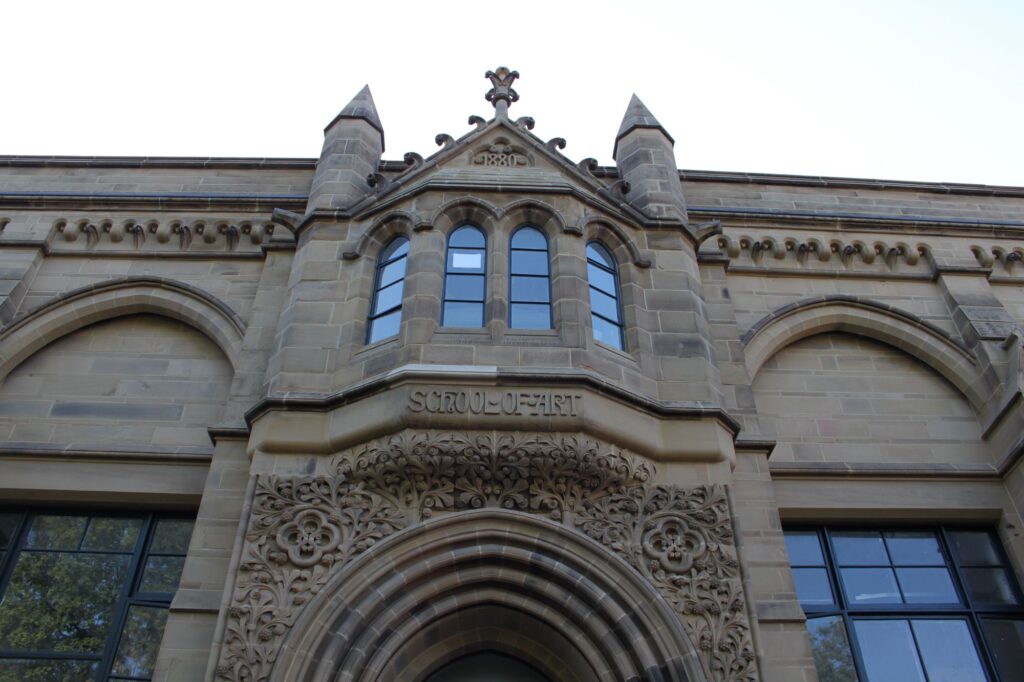
In 1838, Edmund was one of the founders of the Manchester School of Design alongside his friend, James Thomson of the Primrose Works in Clitheroe. This had its home within the Royal Manchester Institution.
In 1853 it was renamed the Manchester School of Art to reflect its change in focus. Edmund was the president from 1855-1858.
Edmund and his son, Edmund Crompton Potter, both contributed to new premises for the School of Art on Cavendish Street, Manchester in 1880.
Politics
Edmund got involved in many of the great political questions of the day and some of his closest friends were politicians.
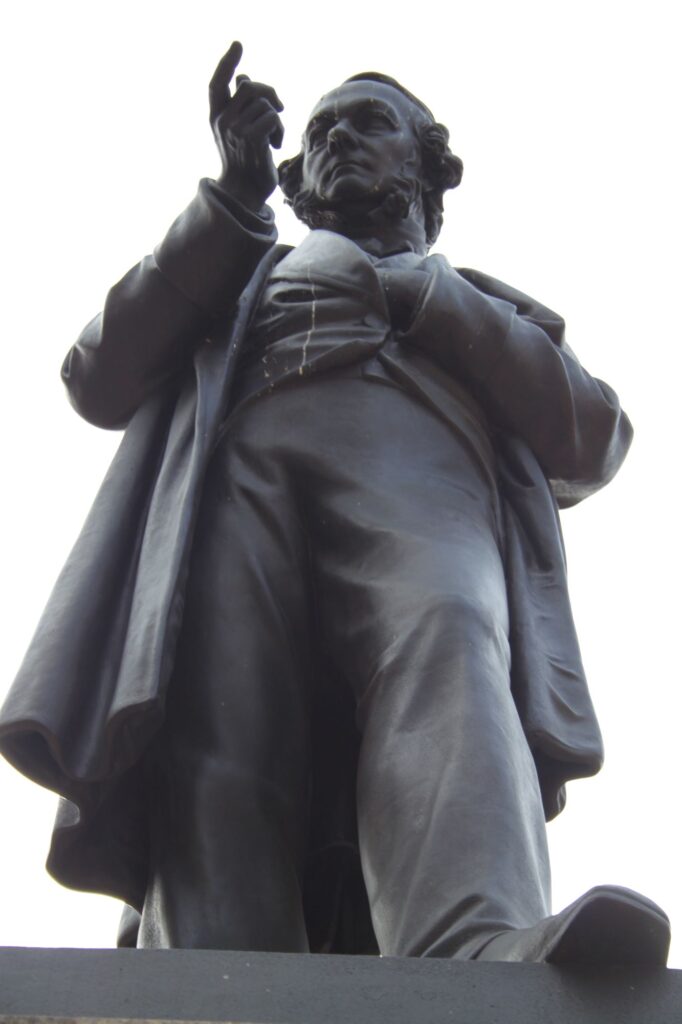
He was an ‘early and intimate friend of Richard Cobden’. Cobden was a Calico Printer, who had been an employee of James Thomson. He was also an MP from 1841 until his death in 1865.
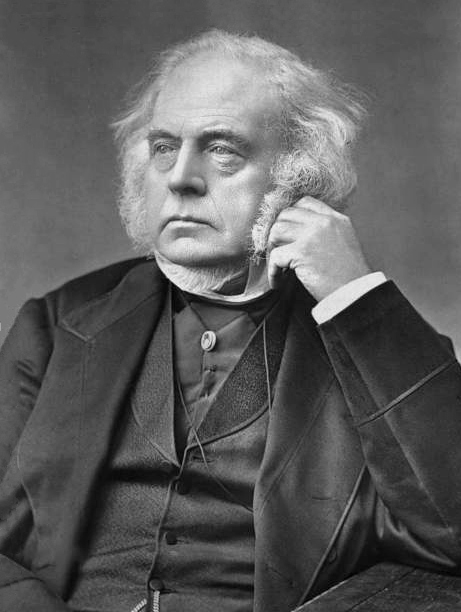
Another close friend was John Bright, who was a renowned politician of his day. Bright’s family owned cotton mills in Rochdale. He toured the Dinting Vale Print Works on occasion, but was probably a regular visit to Dinting Lodge. Bright later became a good friend of Edmund’s son, Rupert.
Anti Corn Law League
Cobden and Bright were at the head of the Anti Corn Law League, founded in 1838. Edmund was involved with the League from its foundation, but not in a prominent way. The Corn Laws placed a high tax on the import of corn, which benefited the rich landowners of the country. This made food for workers very expensive, forcing manufacturers to increase their wages.
The founders of the Anti Corn Law League believed in free trade, with no restrictions. They believed this would be better for everyone including their workers and would encourage international trade.
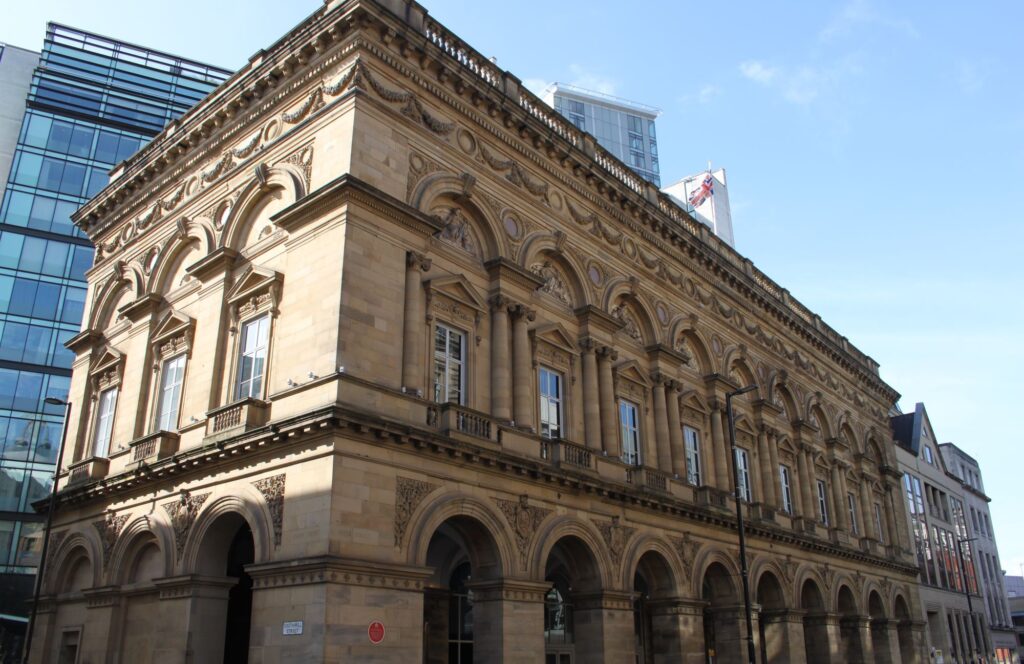
After a long campaign the Corn Laws were repealed in 1846. In commemoration the Free Trade Hall, Peter Street, Manchester was built. The building was designed by Edward Walters and completed in 1853. It was funded by public subscription. It was the venue for public meetings, political speeches and a concert hall for groups including the Halle Orchestra.
The Railway Became Necessary
Edmund described Glossop in 1806 as ‘…distant, in fact separated by bad roads – almost an inaccessible place…’.
Sheffield, Ashton-Under-Lyne and Manchester Railway was begun in 1838. Edmund was a great supporter of the railway and travelled on the first train along the line.
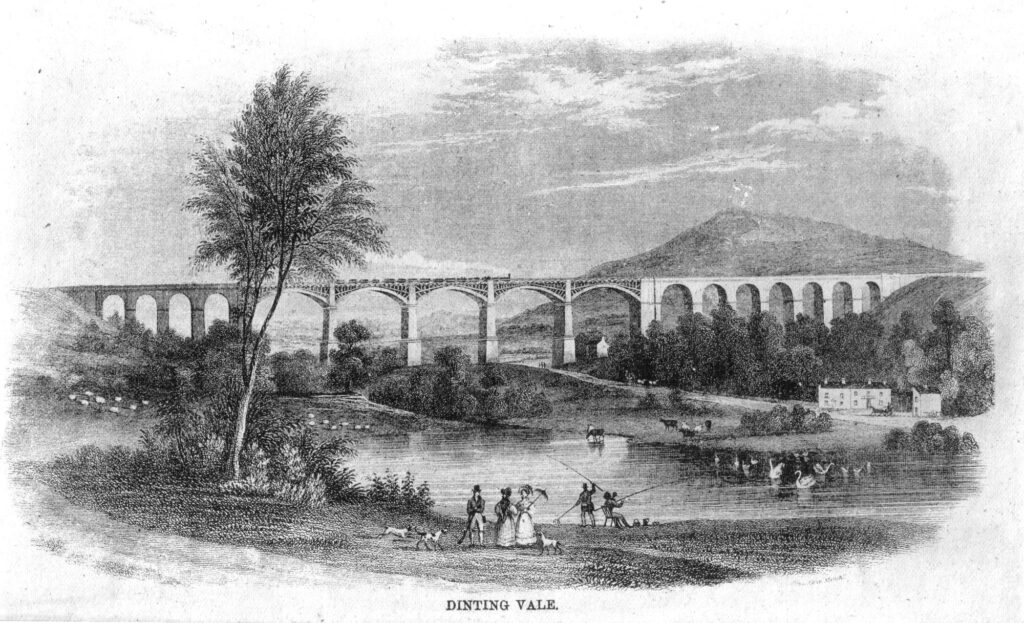
He believed ‘…the railway became necessary, capital forced it, made it, and it removed us from the position of wild moorland to an adjunct of Manchester. It cheapened our carriage and saved our time’.
The railway enabled Potter to bring in the huge amounts of coal he needed instead of mining the local pits. It also allowed him to transport his finished product quicker and easier to Manchester.
The line reached Glossop at Gamesley in 1842. By 1844 Dinting Arches, the wooden viaduct, spanning the valley was completed. The engineer responsible for building the viaduct was Alfred Jee.
Dinting Lodge
Alfred Jee was living at Dinting Lodge in the 1841 census, which had probably been built around 1837. It was common in this area for grand houses to be built by interested parties, such as Edmund Potter, for engineers and surveyors to live in while work was completed.

Around 1842, Edmund moved his young family to Dinting Lodge. The house was grand and luxurious. There was room for all the family and servants. There was a boat house on one of the reservoirs and the house was set in a wooded copse.
Towards the road were houses for the coachmen and gardener and the stables.
Cross Street, Manchester
Cross Street was the hub of the Unitarians and showed their strong connection to Manchester industry. The second building on the right is Cross Street Unitarian Chapel on the same site it has always been since the 18th Century.

The building in front of it was built in 1912, but before that it was Manchester Town Hall until the new Town Hall was built in 1877.
The building in the distance on the left was the Manchester Exchange where the manufacturers traded their goods and the business of the city took place.
John Leech
The Manchester Exchange lost one its most notable men in 1861. John Leech or ‘ready money Jack’ as he was known, owned cotton mills in Stalybridge but “…as an exporter of piece goods and yarns, he was scarcely equalled by any individual or firm in the kingdom…”.
He exported cloth and other goods to the Far East with a fleet of ships. He was also the father of Helen and Elizabeth, who married two sons of Edmund, Rupert and Walter, making a very strong connection between the two families. John lived at Gorse Hall in Stalybridge and later 20 Palace Gardens, Kensington, London.
Mosley Street
During the mid 19th Century, Mosley Street became the commercial district of Manchester. In 1844, as the railway was completed, Edmund moved his warehouse to 14 Mosley Street, Manchester (Harvest House).
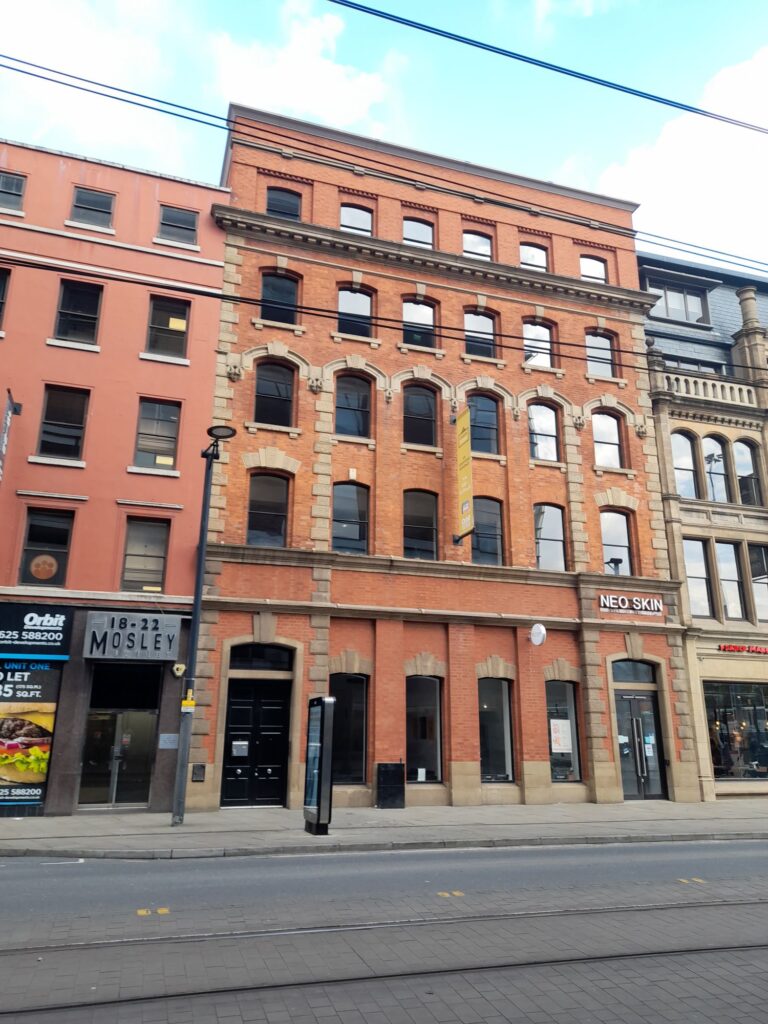
This building had been commissioned by Richard Cobden and built by Edward Walters. In 1848, the warehouse had moved to 20 Mosley Street and had a counting and packing room, three sales rooms and a private counting house.
Calico Printing as an Art Manufacture
Edmund wrote many pamphlets over his long career. ‘Calico Printing as an Art Manufacture’ was published in 1852, after being given as a lecture to the Society of Arts. This had come out of his work as a juror for printed fabrics at the Great Exhibition at Crystal Palace in 1851. He was later involved in the Paris Exhibition in 1855.
In his pamphlet Edmund covered the history of calico printing from its origins in India. “The art is of very ancient date in India, and has its name from Calicut, a district where it has been practised from time immemorial, with great success.”
He covers the work of the Peel family who were at the forefront of calico printing in England. Also, the work of his friend James Thomson, who had been an early experimenter of chemical science with the invention of Turkey Red and Indigo Blue and an early user of copper plates and rollers.
He described the difference in the levels of production between hand block printing and machine printing. Hand blockers could print 6 pieces a day, but with the same workforce a machine could produce 200-300 pieces a day with less defects.
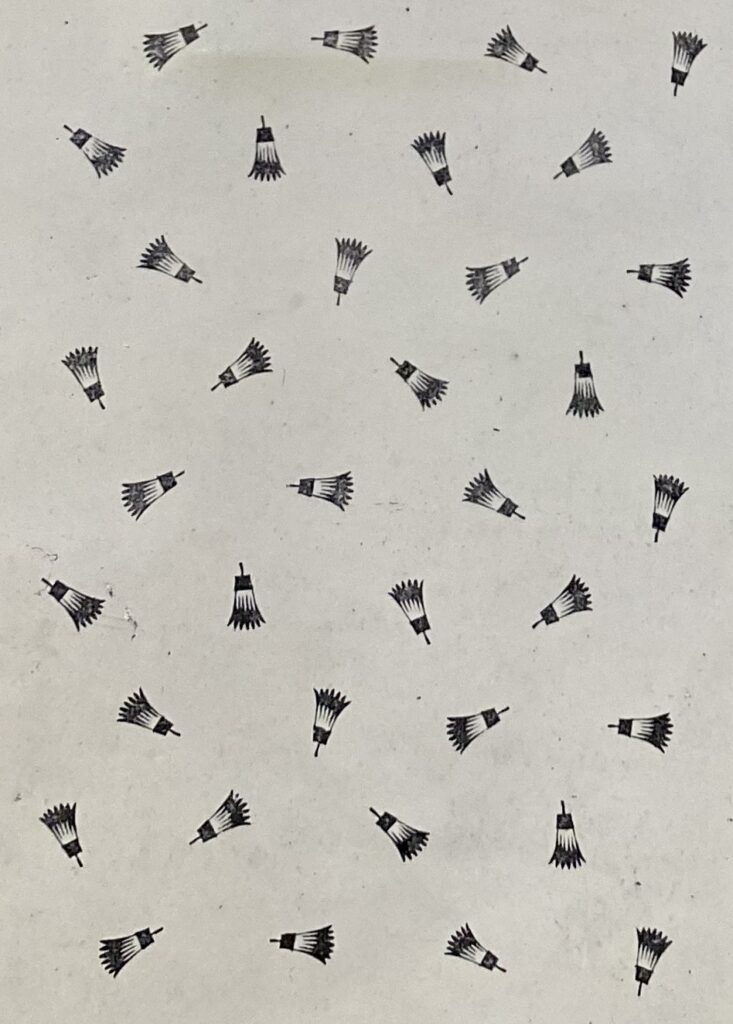
He also discussed different styles and popular patterns. He talked about the broom pattern, which he designed himself in the 1830s. “The broom had character distinct in its size; had it been half the size, it would have been ineffective, if larger, absurd, and consequently unsaleable.” He estimated a quarter of a million dresses had been produced from material of this pattern.
Expansion
After overcoming failure and debt, establishing the railway and living near the Works, Potter embarked on a great expansion.
In 1840 he had 117 hand block tables and 4 machines. By 1846 this had been reduced to 20 hand block tables and 12 machines. Finally, by 1851 he had no hand block tables and 24 machines.
It is believed Potter was the first to convert entirely to machine printing and this was one of the reasons for his great success.

The Works were also at the forefront of research. We know there was a colour laboratory on site in the 1850s and the renowned chemist, Henry Roscoe, became Edmund’s son-in-law in 1863 marrying his daughter Lucy.
A Picture of a Manufacturing District
On a cold January evening in 1856, Edmund gave a lecture to Littlemoor and Howard Town Mechanics Institute at Glossop Town Hall. Local manufacturers and workers filled the Hall to listen.

In ‘A Picture of a Manufacturing District’, Potter gave his view of Glossop in 1856 as a manufacturing town. It includes his thoughts on employment, wages, the poor, religious worship, education, libraries and amusements and recreation.
He later published the lecture as a 56 page pamphlet, providing us with one of the best sources of life in Glossop at this time.
Glossop Philanthropy
Dinting Mill School

Edmund purchased Dinting Mill in 1840 and later renamed it Logwood Mill, as it processed logwood to produce a black dye on the ground floor.
On the upper floor he opened a day school for young children and half timers. The first school master was Thomas Bailey. The children were taught reading, writing, arithmetic and drawing. They were also taught cleanliness and there was a wash room by the top of the stairs with soap, towels, brushes and blacking for clogs.
Library and Reading Room
Just inside the entrance to the Print Works was a library and reading room, which had been first built in 1845. This provided an excellent assortment of books on subjects such as religion, science, history and travel as well as newspapers and periodicals.

The librarian for many years was Thomas Barlow, who was an employee at the Print Works, but also a published poet known as “The Bard of Longdendale”. Barlow’s book ‘A Pic-nic at Woodhead: Scenes Around Castleton; and Other Poems’ published in 1867, was dedicated to Edmund Potter – ‘the friend of the people and popular education’.
Charlotte House
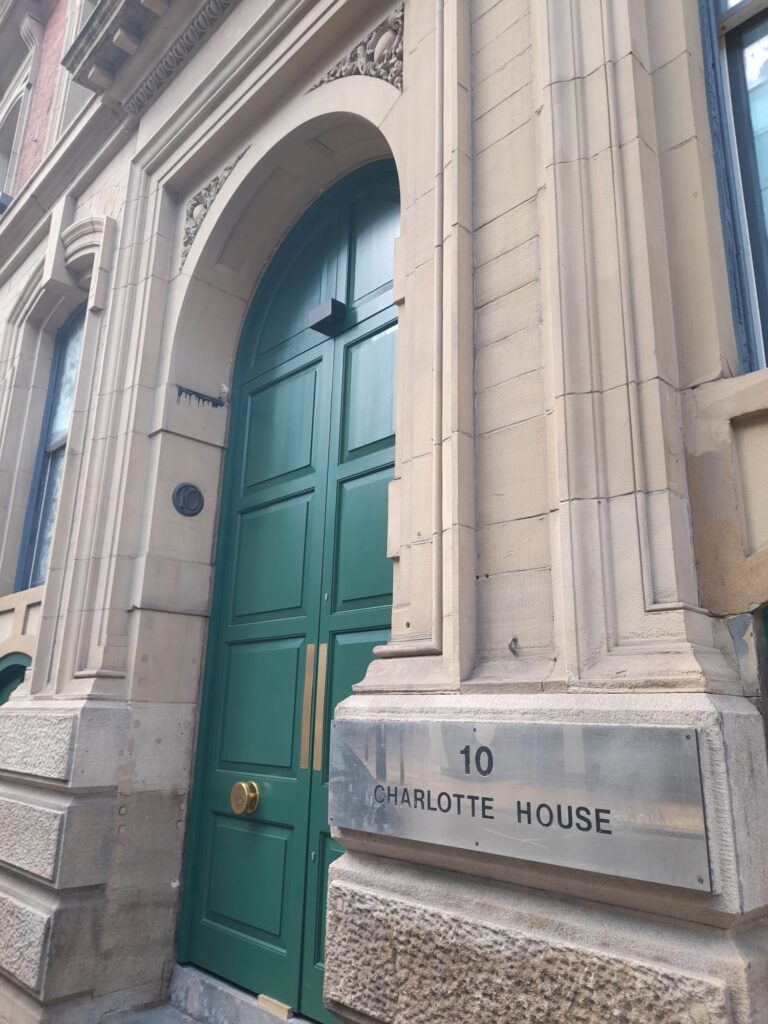
A good sign of Potter’s success at Dinting Vale Print Works was the commissioning of a new purpose built warehouse – Charlotte House, 10 Charlotte Street, Manchester.
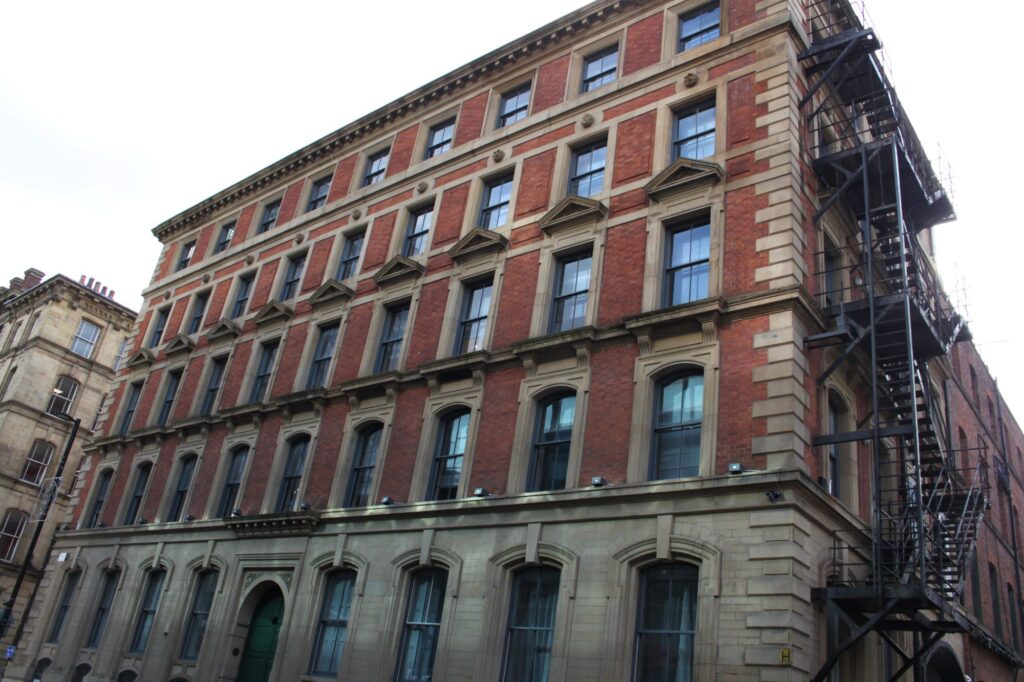
The warehouse was designed by Edward Walters, who built many of the giant warehouses of Manchester. It was built around 1857 in the Italian Palazzo style with six storeys including the basement.
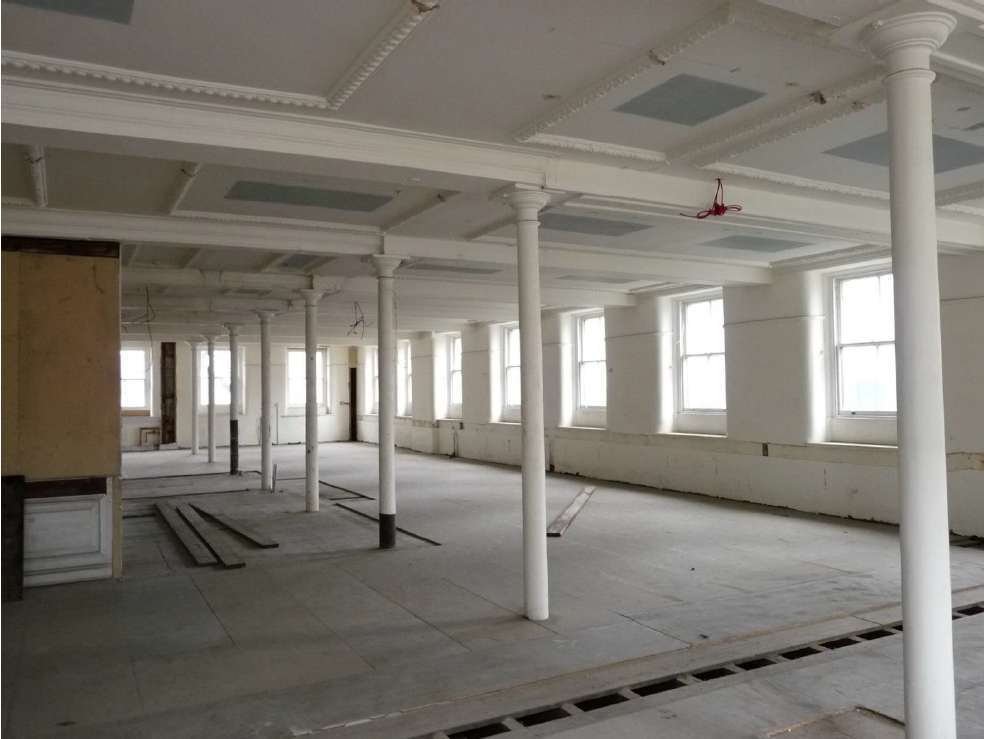
Manufacturers used their warehouses to put goods on display for clients to view. They also included packing rooms, loading bays and counting rooms (there is a large safe on the lower ground floor).
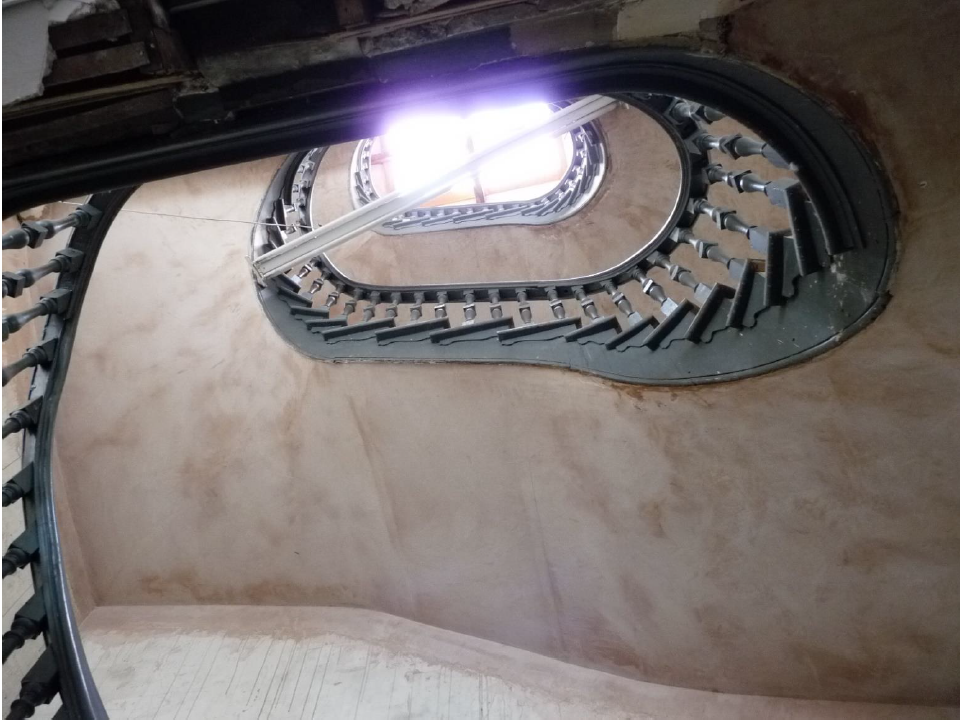
Charlotte House is Grade II listed with some alterations in 1920s when it was turned into offices, but it still retains many original features. It has typical 1850s warehouse construction of a timber floor on timber beams and cast iron columns. It also has its original principal staircase.
Art Treasures
In 1856, Edmund was made a Fellow of the Royal Society for his work on scientific calico printing. In this he followed his friend, James Thomson, who had died in 1850.
Potter was on the Executive Committee for a remarkable event in 1857, which he later said he had put two years of hard work into bringing it together.
The Art Treasures Exhibition is believed to be the largest art exhibition that has ever been displayed in this country. It was built at Trafford Park and open for 5 months in 1857.
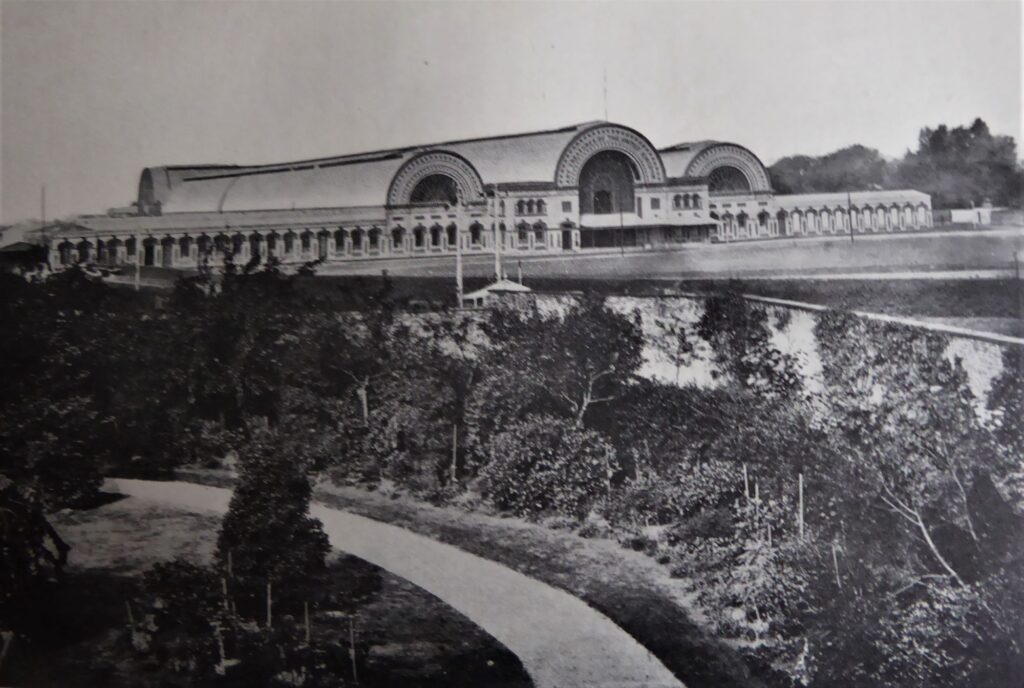
On display were 16,000 art works, many from private collections and also the Royal Collection. There were paintings, sculptures, photographs, tapestry and illuminated manuscripts.
It was open to all, but with different ticket levels. Trips were organised from factories, schools and other organisations including all of Potter’s employees. It is estimated over a million people visited during the five months it was open.
Cotton Famine
Edmund was elected President of Manchester Chamber of Commerce 1859-1862. This was a sign of his standing within the industry, as this period covered a great crisis in the cotton industry.
The cotton famine was a question of economy, but also morals. The major cause of the crisis was the interruption of the cotton supply from the southern states of America during the American Civil War. The cotton in the southern states was grown by enslaved people, as slavery had not yet been abolished in America. The South hoped to become independent and hoped by withholding cotton they could persuade the British to support them.
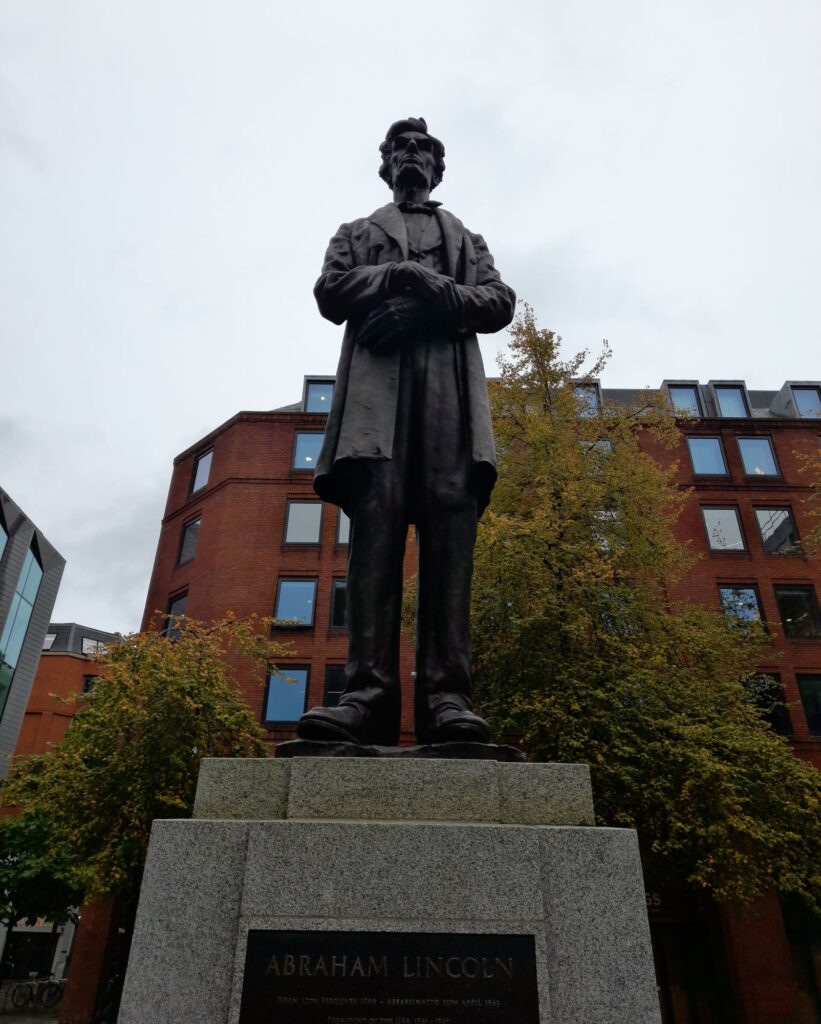
The opposing side in the Civil War was the Unionist north led by Abraham Lincoln. The Unionist North hoped to abolished slavery by blockading the Southern ports and stopping the supply of cotton out of America. In 1862 Lincoln issued his emancipation proclamation and hoped the British Public would support him in abolishing slavery and not intervene in the south.
Slavery had been abolished in the British Empire by the Slavery Abolition Act in 1833, but much of the cotton industry relied on the American grown cotton.
Abolitionists
John Bright, as a Quaker, was totally opposed to slavery. He was a great supporter of Abraham Lincoln and even corresponded with his advisors during the cotton famine. Richard Cobden and Edmund Potter were both ardent abolitionists.
In the years before Potter had campaigned on the cotton supply questions. Both he and Bright believed they should look to importing cotton grown by free workers in India instead of from America.
“He (Potter) believed that slavery had been very profitable; and so its evils had been passed by until they had festered and demoralized the whole of the States.”
Manchester Chamber of Commerce Annual Meeting. Manchester Guardian 31 January 1862
Without a supply of raw cotton, most of the cotton industry in the North ground to a halt and this placed the workers in the mills in distress. Edmund Potter appealed to the Government to provide some financial relief to the North.

Some areas were affected more than others. In some areas there was widespread starvation and deaths. In 1862 a meeting of working men was held in the Free Trade Hall. They decided to send an address to Abraham Lincoln in solidarity and supporting the Union against slavery, despite their hardship. Abraham Lincoln sent a responding address in 1863.
Cotton Famine in Glossop
Locally Edmund Potter tried to provide for his workers during the cotton famine. He gave loans to his workers and supplied food. He worked with other local manufacturers and Lord Howard of Glossop in providing relief committees and a programme of works.
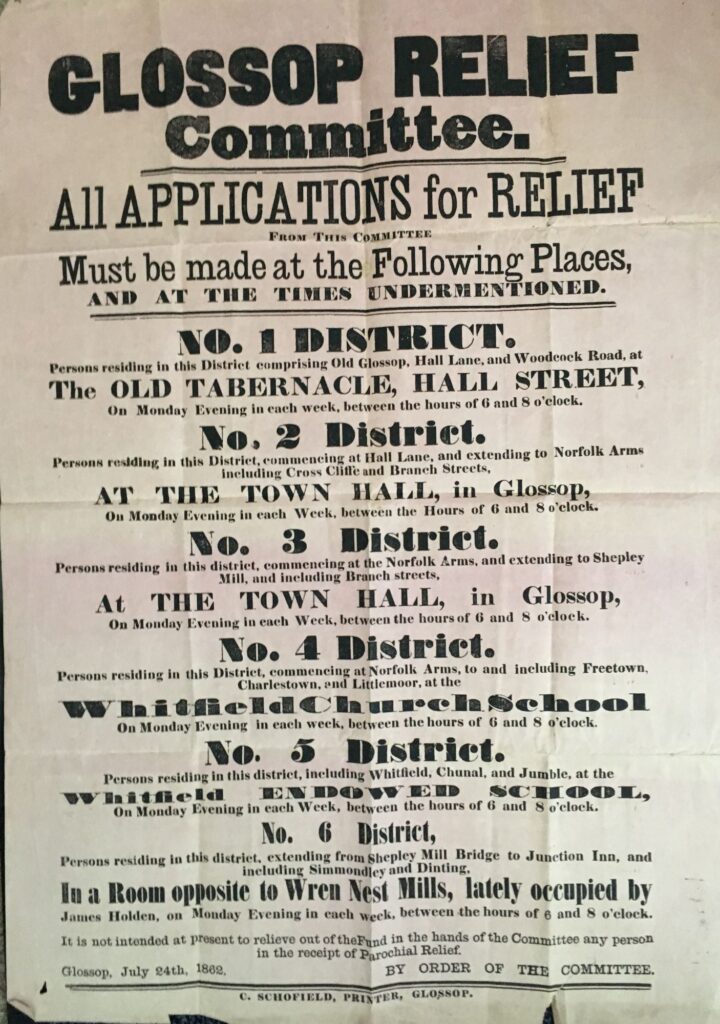
Potter undertook a new building programme at the Dinting Vale Print Works including a new reservoir and bleaching works. He diverted the road to create a new entrance and built a new roller engraving department and printing shop that could house 25 new machines. These works were completed by late 1860s, by which time he was believed to be the largest calico print works in the world.
Cotton first returned to Glossop in 1864, followed by a more regular supply in 1865. The North won the American Civil War and in 1865 slavery was abolished in America.
In Literature
North and South
We can get some clues to views of Edmund Potter as a manufacturer from a few sources. There are many similarities between Edmund and the character of John Thornton in the novel ‘North and South’ by Elizabeth Gaskell.
Edmund lost his father at young age, worked as a magistrate in a ‘hot, reeking, Town Hall’. He was also called as a magistrate to an incident in Glossop in 1853, where boys were throwing stones at people and property at the By Election in 1853, shortly after a strike period. This is strikingly similar to a pivotal scene in ‘North and South’.

It is easy to imagine with William Gaskell’s close friendship with Edmund, his wife would have plenty of material to work with.
John Thornton also has much to say about the relationships between manufacturers and workers that were similar to Edmund’s own point of view. He was strongly opposed to trade unions and wrote a pamphlet detailing his thoughts against them. His expressed his dislike of all forms of co-operation including friendly societies and volunteer militia, which he prevented forming in Glossop during his time there.
Das Kapital
Karl Marx made comment in his book ‘Das Kapital’ in response to one of Potter’s letters to ‘The Times’ in 1863. In the letter, Potter explained why the North needed financial relief during the cotton famine, instead of sending their workers to find work elsewhere. It had been nicknamed the ‘Manufacturers’ Manifesto’ in the House of Commons.
Potter described how the workers were the living machinery and movable fittings of the factory – “they are the mental and trained power which cannot be replaced for a generation”. Marx responded that the emigration of workers was prevented and they were locked up in the “moral workhouse (the cotton districts)”.
Queen’s Gate, London
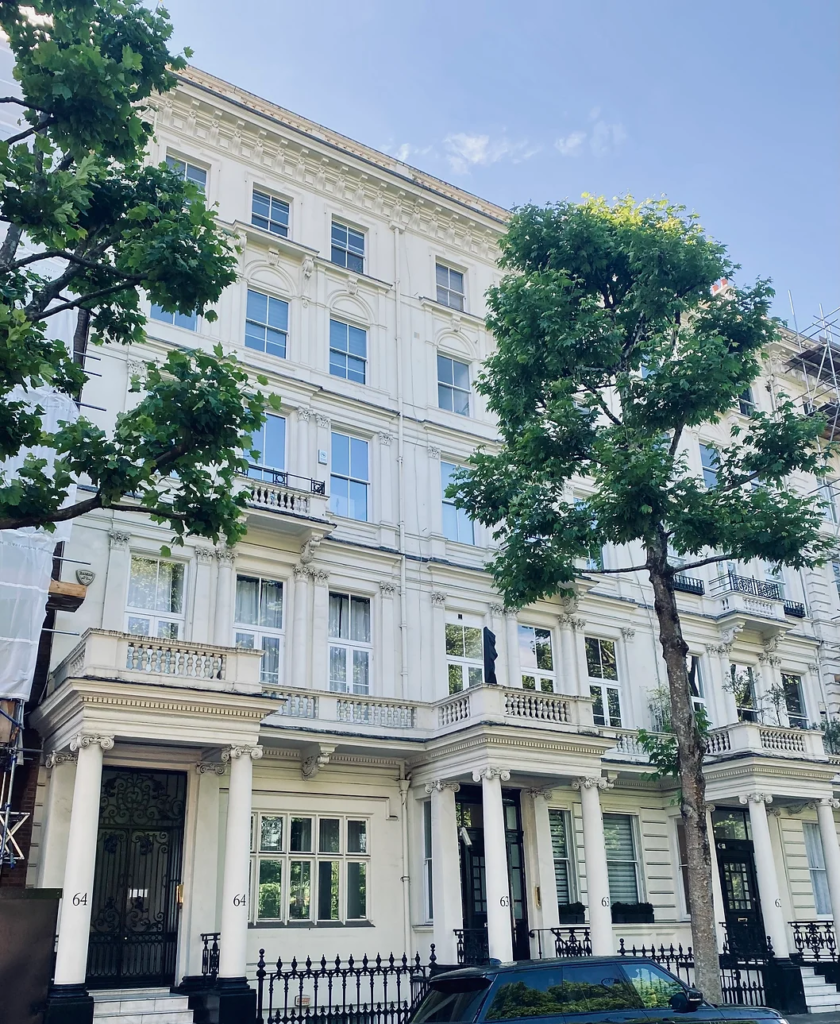
In 1861, Edmund embarked on his political career, as MP for Carlisle. He moved to London and left the works in the hands of his eldest son, Edmund Crompton Potter. During his time in London he lived at 64 Queen’s Gate with his wife, Jessy and his unmarried eldest daughter, Clara. His home at Queen’s Gate is in Kensington, just around the corner from the Natural History Museum and the V&A Museum.
Retirement
Edmund officially retired from the Dinting Vale Print Works in 1873. On 6 December 1873 a large tea party was held for 1,000 people at Logwood Mill.
There were decorations and bunting including a Potter shield with a ‘dragon’ (probably a seahorse, which was the emblem on the Potter coat of arms) and one word underneath ‘persevere’.
The oldest employee at the works, Mr Bramhall, presented Edmund with a memorial on vellum. The memorial had been written by Thomas Barlow, chairman of testimonial committee – “To place on record the high esteem and personal regard in which you are held by all of us.”. It praised his and his wife’s kindness in promoting the school and library and kindness in adverse times.
Potter then gave a long speech about how he built up the Print Works from his first arrival at Boggart Mill in 1825.
Edmund made a retirement gift to his workers of a new canteen and bathrooms. It was said “The name of Edmund Potter will be warmly cherished among your old servants at Dinting Vale”.
Camfield Place
Edmund bought Camfield Place, near Essendon, Hertfordshire in 1866. It was then a Tudor mansion with grounds laid out by Capability Brown in the early 1800s.
Beatrix Potter wrote an essay about Camfield Place in 1891, which she described as ‘the place I love best in the world’. “…it was a good-sized small-roomed old house of no particular pretensions, the outside, red brick, white washed.”
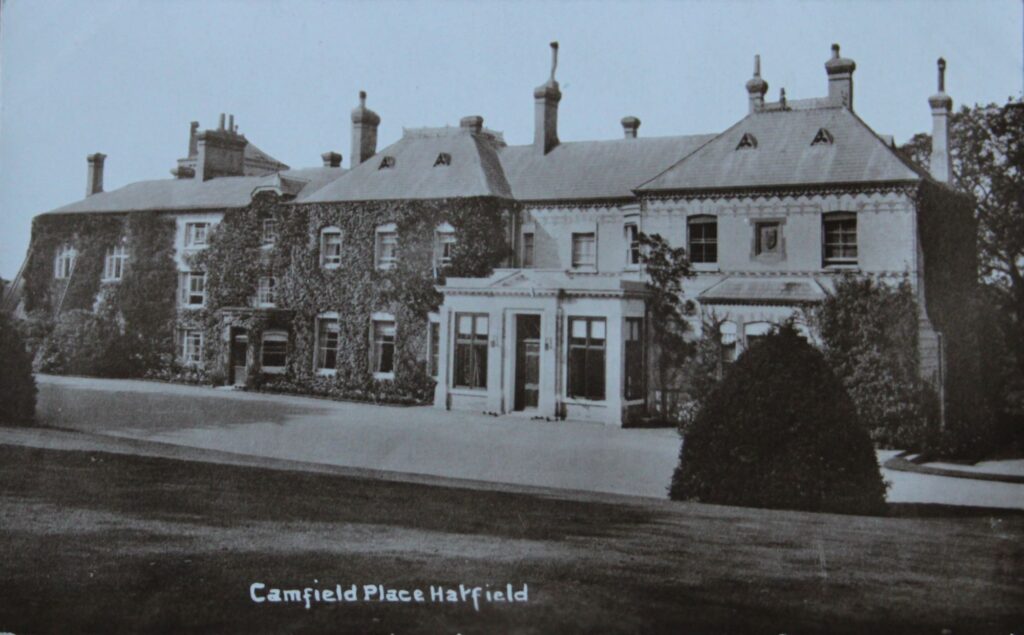
Edmund rebuilt the house retaining some of the old part. He also added a new part with six sitting rooms and six bedrooms above in an Italianate style.
Beatrix was a frequent visitor to her grandparents at Camfield Place. Edmund retired as an MP in 1874 and although he kept his London house, he spent most of his time at Camfield Place after this point.
There was a marked deterioration in both his physical and mental health. Beatrix Potter mentions in her journal, ‘the struggle to get grandfather to bed when he was ‘out of his mind’’.
Edmund Potter died at Camfield Place on 26 October 1883.
The house was sold after the death of his wife, Jessy, in 1891.
Buried at Gee Cross
The remains of Edmund Potter were transported to Godley Station and then taken to Hyde Chapel at Gee Cross. He was buried on 31 October 1883.
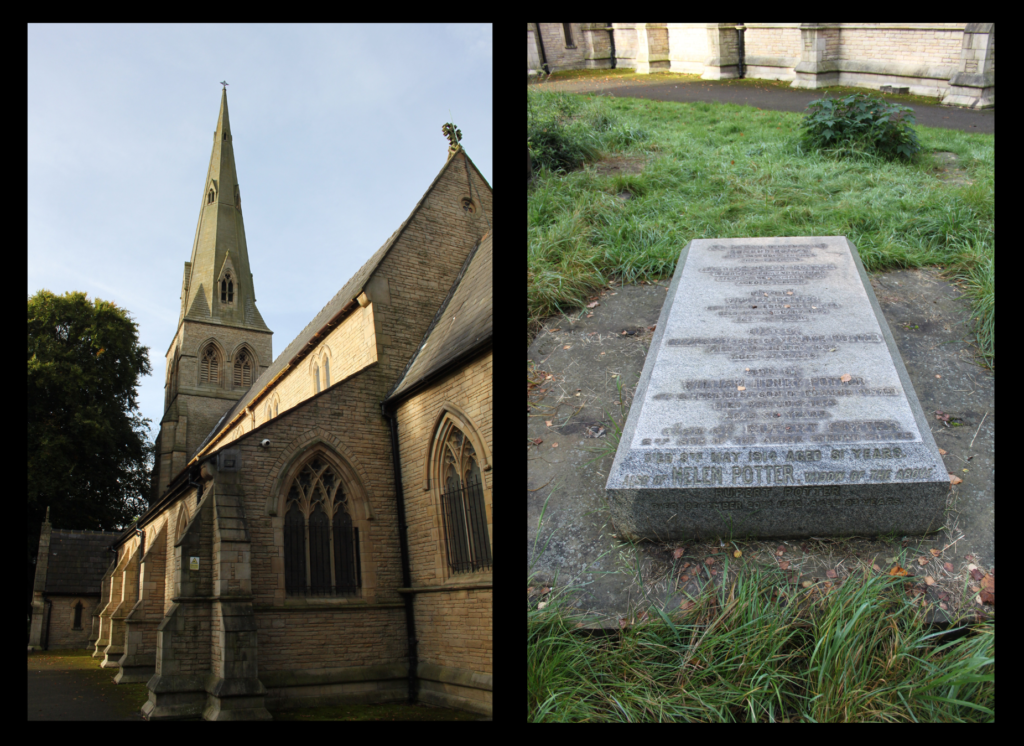
He is buried with Jessy, his wife. His sons Rupert, Walter and William and Rupert and Walter’s wives Helen and Elizabeth.
Largest Calico Print Works in the World

At time of Edmund Potter’s death, Dinting Vale Print Works:
Used 2 million gallons of water a day.
Used 25 boilers consume 80-85 tons of coal.
Employed 1000 people.
51 machines produced 1 ½ million pieces (of 30 yards) annually enough to encompass the world.
The Print Works became part of the Calico Printers’ Association in 1899. It finally closed in 1966 after being one of biggest employees in area for over 140 years.
Blue Plaque
Edmund Potter played an important part in Glossop’s history, and we continue to research his life and legacy. In 2014, we commemorated Edmund, who was the first recipient of our Blue Plaque scheme. The plaque was placed on Dinting Vale House during an event and exhibition.
On the 140th anniversary of his death, I leave you with wise words from Edmund himself:
“… the object of all of us ought to be, to leave the world better than we found it.”
Edmund Potter, 1856
Postscript
This article was written by Kate Raine, Historian and one of the Directors of Glossop Heritage Trust on the 140th anniversary of the death of Edmund Potter. This article is a reproduction of the talk given on the evening of 25 October 2023 in Glossop.
The talk and article continues research begun as part of Print & Place Project by Lauren Riley. You can purchase art works created as part of the project here.
You can discover more about Dinting Vale Print Works and the surrounding area on our Edmund Potter and Dinting Vale Print Works walk.
Selected Sources
With thanks to Lauren Riley, Marion Barter, Special Collections Museum at MMU, Portico Library and Elizabeth Gaskell’s House.
All photographs are the author’s own unless otherwise stated.
Books and Articles
BRILL, Barbara. William Gaskell 1805-84 – A Portrait by Barbara Brill. Published by Manchester Literary and Philosophical Publications Ltd 1984.
GODFREY, Rowena. ‘A Genial Man: Edmund Potter and his Calico Printing Work’ in Beatrix Potter’s Family and Friends. Beatrix Potter Studies XI. Papers presented at The Beatrix Potter Society Conference, Birnam, Scotland, August 2004. Edited by Libby Joy and Judy Taylor. Published by the Beatrix Potter Society, 2005.
HURST, J. G.. Edmund Potter and Dinting Vale with a foreword by R. M. Lee. Published by Edmund Potter and Company Limited, Manchester, 1948.
KEIVIT, Katha. ‘Edmund Potter – Nineteenth Century Calico Printer’ in Uncoverings – American Quilt Study Group. 1 Jan 2019. (Text available online – https://www.thefreelibrary.com/Nineteenth+Century+Calico+Printer.-a0660701065)
LEAR, Linda. Beatrix Potter – A Life in Nature. First Published by Allen Lane, 2007. Published in Penguin Books, 2008.
POTTER, Beatrix. The Journal of Beatrix Potter from 1881 to 1897, transcribed from her code writing by Leslie Linder. Published by Frederick Warne & Co. Ltd., London. Third reprint 1966. Printed by William Clownes and Sons, Limited, London and Beccles.
POTTER, Edmund. A Picture of a Manufacturing District – A Lecture delievered in the Town Hall, Glossop to the Littlemoor & Howard Town Mechanics Institution on Tuesday evening, January 15th, 1856 by Edmund Potter. London: James Ridgeway, 169, Piccadilly. Manchester: Johnson and Rawson, 65, Market Street. 1865. The University of Warwick Library.
POTTER, Edmund. Calico Printing as an Art Manufacture – A Lecture read before The Society of Arts, April 22, 1852 by Edmund Potter, Reporter to the Jury on printed fabrics, class 18, in the exhbition. London: John Chapman, 142, Strand. Manchester: Johnson, Rawson, And Co., Corporation Street. 1852. (Available online at Google Books)
REEVE, Glynis. a North Country Lass – Beatrix Potter’s roots in the millscapes of the North West. Self published, 2001 based on a lecture given by Glynis Reeve to the Beatrix Potter Society on Saturday 21st October 2000. Printed by Interlith (Derby) Ltd, Dinting Lane Industrial Estate, Glossop.
Archives
Derbyshire Record Office. D1589 Calico Printing Library of Alderman J G Hurst of Glossop.
GHT Archives. Photographs and papers of Dinting Vale Print Works, Edmund Potter and other related material.
Portrait of Edmund Potter by Samuel Sidley held by the Special Collections Museum of Manchester Metropolitan University.
Painting of Dinting Vale by Thomas Christopher Hofland, Landscape Painter of Derby (Private Collection)
Newspapers
Glossop Chronicle, various articles
Manchester Guardian, various articles
The Times – Obituary, 29 October 1883