
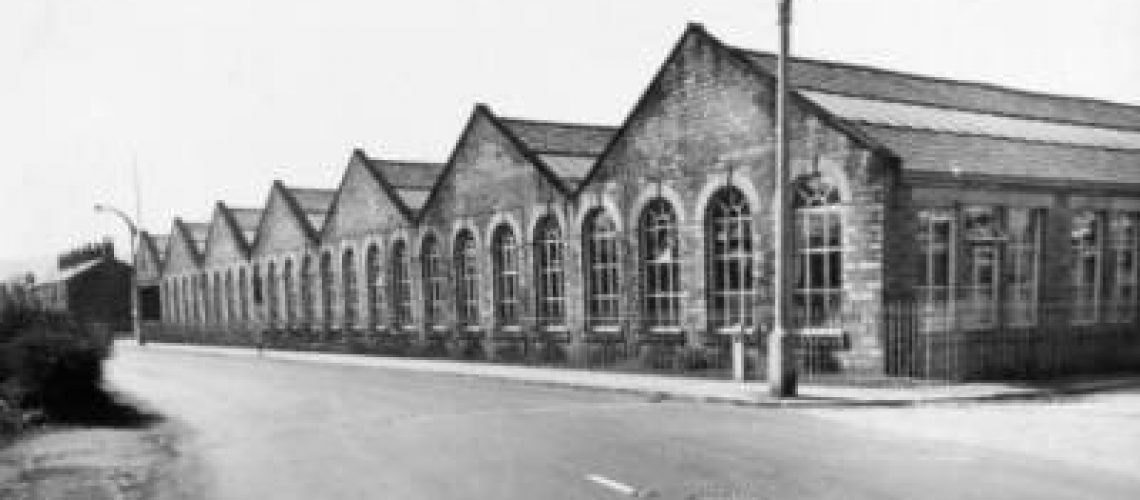
John Walton was a Master Bleacher, born in Lymm, Cheshire in 1810. He married Sarah Mather on 18th November 1832 at Manchester Cathedral. Both signed the marriage entry with a “mark” indicating that neither could write. From his marriage to the mid 1850’s the family lived in and around the Bolton area of Lancashire, which was an early centre for the chemical bleaching of cotton, much of which was used for making inexpensive printed calico fabric.
Around 1855, John Walton took over the Upper Bleach Works in Heaton Mersey. According to the records of the Bleacher’s Association, this works had been established from 1830 and had been owned by J Whittaker, but had suffered under the bad trading conditions of the 1840’s. With the purchase of this works, John Walton established the business of John Walton Ltd., that was to grow substantially and continued in the Textile Finishing Industry until 1988.
John Walton Ltd., was a family concern with three of John & Sarah’s six sons working in the Heaton Mersey operation together with John’s son in law, William Wyatt, who was the husband of John’ s daughter Mary.
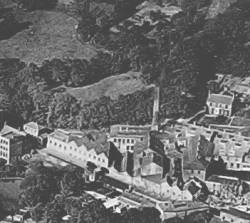
During the 1860’s the company prospered sufficiently to expand into other bleaching operations in various locations around Greater Manchester. In 1869 John Walton purchased the Charlestown Mill, Glossop with adjoining land containing, in all, 6 acres, 3 roods and 30 perches, from Matthew Ellison Hadfield. The documents relating to the sale include the site of the factory and dwelling houses at Charlestown. The mill was built in 1792, by Charles Hadfield of Lees Hall, Whitfield, just below the confluence of Gnat Hole Brook and Long Clough Brook. The operation at Glossop was run by John Walton jnr and his brother in law, William Wyatt
Between 1882, when John Walton senior died, and 1886 the business suffered the loss of three other key people. In 1885, Thomas Walton, manager of the Heaton Mersey operation died at the early age of 42. In January 1886 William Wyatt aged 50 and, in May of that year, John Walton junior aged 45 both died suddenly. William and John being key individuals at the Glossop Bleach works and the relatively young ages when they died speaks to how unhealthy bleaching and dyeing operations were at that time.
The 1891 census shows that the Wyatt sons, Ernest, Joseph & James, were the only family members working at Charlestown. In 1885, daughter, Mary Hannah Wyatt married Alfred Blades Smith, a director of Tootal Broadhurst Lee & Co Ltd., spinners, manufacturers and merchants, the original company established in Manchester in 1799. Alfred B Smith was most probably instrumental in John Walton Ltd., becoming a subsidiary of the Tootal Corporation.
|
|
|
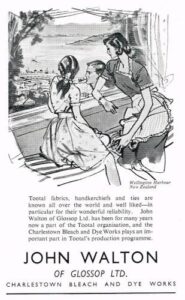
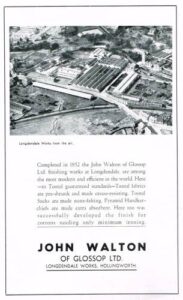
By 1951, Tootal had expanded their operations into other branches of the textile (cotton) finishing industry; including a process called Standfast, which was invented and developed at the John Walton works and the research department in Manchester. The Charlestown premises were now no longer suitable, being cramped and without room for expansion. The directors realised that a new building must be found and were fortunate to acquire premises at Woolley Bridge known locally as the Combine and officially as the River Etherow Bleaching Co. Ltd. Originally constructed in 1910, on the south bank of the River Etherow, new buildings were added to the original mill, during 1951 & 1952.
In 1957, a newspaper article described the Etherow Plant as “Britain’s most modern textile works.”

In 1984, the company was bought by Vantona Viyella, saving 283 jobs. However, John Walton Ltd. closed a few years later with considerable loss of jobs, apparently due to the “rationalisation of the textile industry in Britain.”