
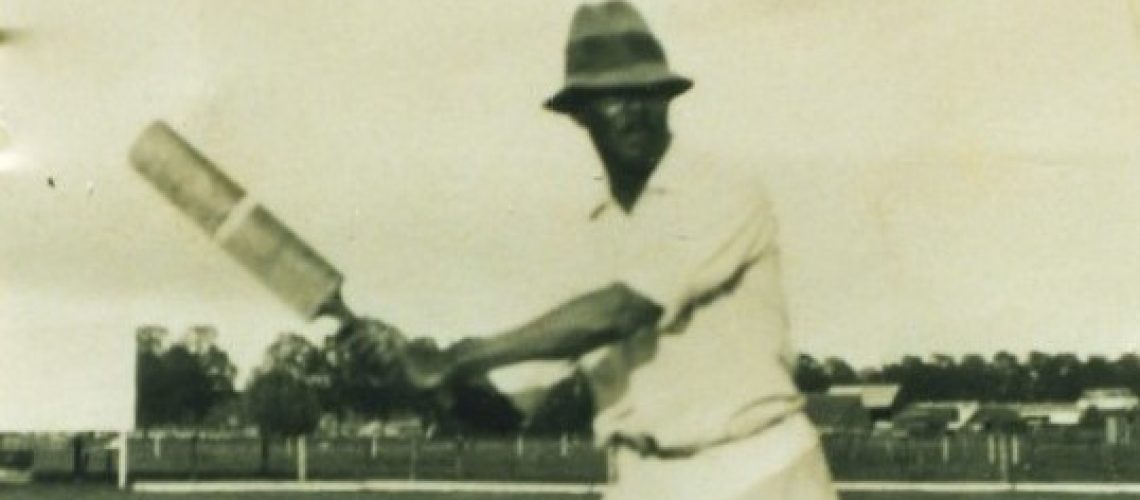
Cricketer
First black West Indian to play County Cricket in England
Charles Augustus Ollivierre was born in Kingstown, St Vincent in 1876. He played cricket throughout his childhood. He later played first-class cricket for Trinidad.
In 1900 he was selected to play in the West Indies Team for a tour of England. The tour received much attention and Ollivierre’s abilities as a powerful batsman were noticed.
At the end of the tour, he received offers to play first-class county cricket. He accepted an offer to come and play cricket for Derbyshire that was likely made by Sir Samuel Hill-Wood.
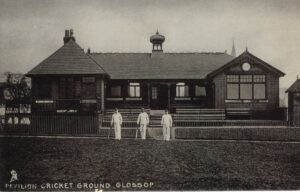
He was welcomed to Glossop at the Glossop Cricket Club Annual Dinner in November 1900, where he raised a toast to “The Vice Presidents and Honorary Members”. He hoped success could be brought to the Glossop Club as they entered the Central Lancashire League.
Ollivierre in Glossop
Ollivierre worked at Woods Mills (Howardtown Mills) during the two years residency he needed before he could qualify to play county cricket for Derbyshire. In the 1901 census he was boarding with Mr and Mrs Cunnington and their family at 15 Talbot Street. He was at this time employed as a writing clerk. Later he was reported to have worked at Wren Nest Mill (Sumners Mill).
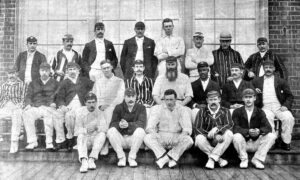
Ollivierre (middle row – 3rd from the right) is seated to the right of the famous cricketer, Dr W. G. Grace (middle row – 4th from the right). The photograph includes some of Ollivierre’s other Glossop team mates – J. A. Berwick (back row – far right) and H. Bagshaw (middle row – 2nd from the left)
He played cricket for Glossop for these two years as well as the Derbyshire XI. This was a team made up of established and former players, young players and trialists who played friendly matches across Derbyshire.
A couple of stories have passed down into legend about Ollivierre’s time in Glossop. He once made a ‘legendary six hit’ from Glossop Cricket Ground to the football flagstaff near the Arundel Street Railway Bridge. In 1904 the famous US showman, Buffalo Bill, visited Glossop. He was supposedly involved in a confrontation with Ollivierre in the Norfolk Arms of which Ollivierre’s team mate Alfred Charlesworth was landlord, and was ejected after he refused to share the bar room with a black man.
By 1903 Ollivierre had completed his two year qualification period and began to play for Derbyshire. He was also playing for Glossop when they won the Central Lancashire League in 1903.
Later Years
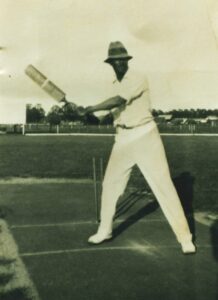
Ollivierre continued to play for Glossop occasionally but later moved to Matlock. His county cricket career ended in 1907 when he retired due to poor eyesight that had been caused in a tennis accident a few years before.
He eventually moved to Pontefract where he lived for the rest of his life. He continued to play and coach cricket.
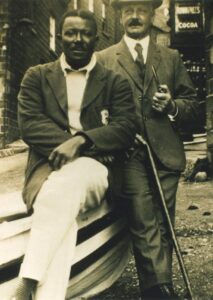
He passed away in 1949 and is buried at St Stephen’s Church, Fylingdales on the Yorkshire Coast, where he often stayed and was a place he had a great attachment to. His gravestone was erected by an unknown person and is inscribed “in loving memory a dear friend”.
In 2022 Glossop Heritage Trust unveiled a Blue Plaque commemorating Charles Augustus Ollivierre at Glossop Cricket and Bowling Club, North Road, Glossop.
Tim Knebel, Peak in the Past
Tim Knebel of Peak in the Past has written a very comprehensive history of the life and career of Charles Augustus Ollivierre and his time in the Peak District.
“Charles Augustus Ollivierre (1876-1949) is a trailblazing sporting figure of national significance: the first black West Indian to play county cricket in England who helped break down major barriers of racial prejudice in his lifetime. He played matches all over the country in front of thousands of spectators against some of the biggest names in international cricket at the time, capturing the attention of fans of the sport and newspaper reporters wherever he went.”