
We’re not the first to think our roads aren’t fit for purpose. In the 17th century there were lots of complaints that they were narrow, congested, muddy, potholed, often flooded, and the authorities were doing nothing.
It hadn’t always been like that. Since prehistoric times, people had got around pretty well. Longdendale had always been a major east-west trade route, and there was also an important way running south-east – north-west, from the East Midlands into Lancashire via Mottram. Traffic also went north, via Arnfield into the Chew valley, and east along Doctor’s Gate into South Yorkshire. There were at least 40 miles of these ancient long-distance routes criss-crossing the area, in addition to local lanes between the villages and farms.
They weren’t engineered roads as built by the Romans. Travellers, mainly on foot or horseback or leading trains of packhorses, just followed the best line there was over what was still mostly open country. If the line got too worn or muddy they would start a new one, so many “highways” were wide bands of shallow ruts, or “braids”. The way coming down into Charlesworth was at least 200 feet wide. Where the traffic couldn’t spread out the ruts wore down into “holloways”. Although now nothing like as deep or wide as they were, these can still be clearly seen in many places locally, as (see pic) at the top of Chunal beside the A624, where traffic from Rowarth merged with ways coming from Edale and Buxton towards Glossop.
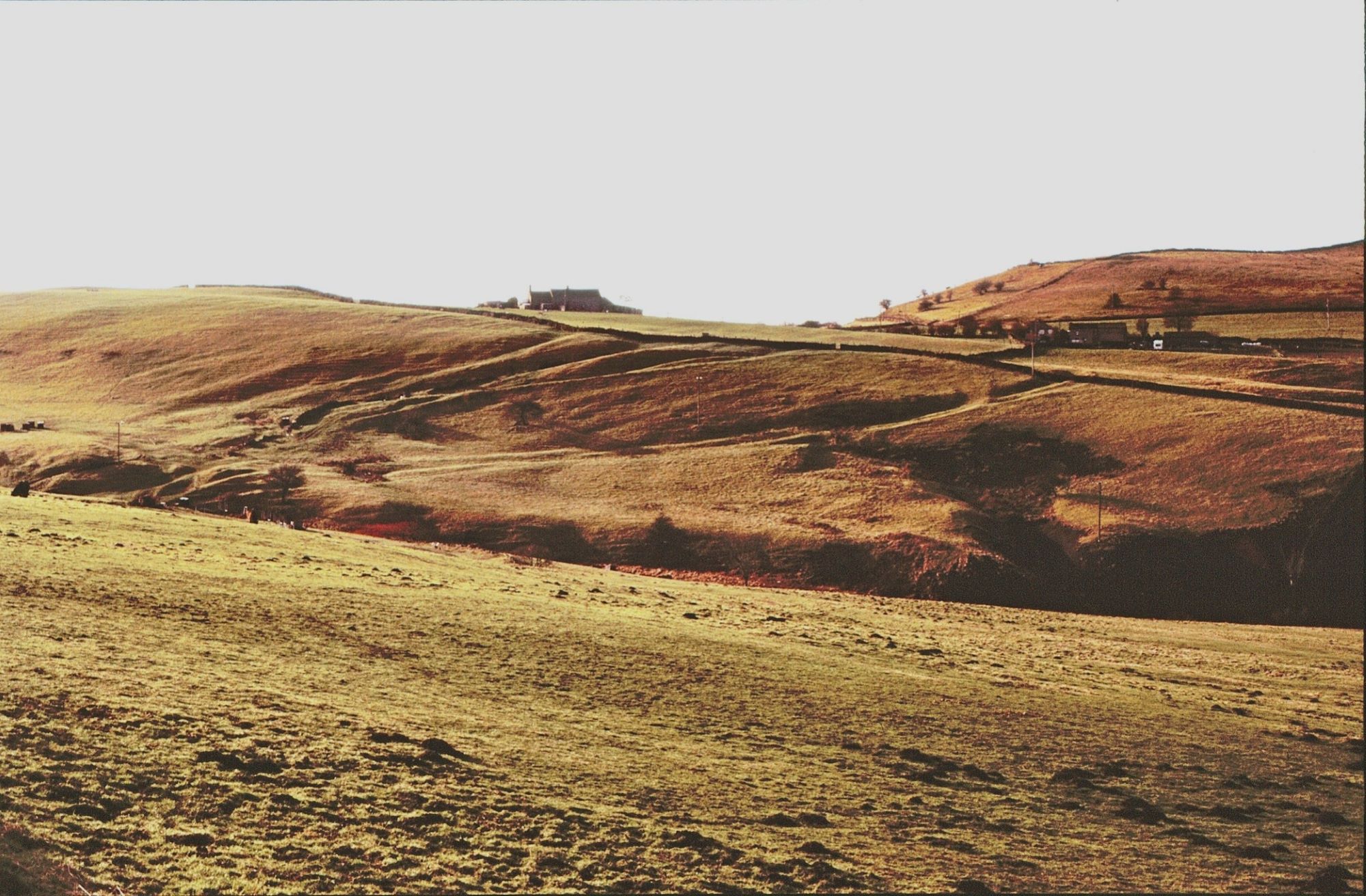
Many of these ways could also take wheeled vehicles, at least in a dry summer. Early carts and carriages had big strong wheels and high ground clearance and so could bump slowly along in the ruts, although the slopes were often too steep for them, and if two of them met in a deep holloway….
Although through traffic now does virtually nothing for the local economy, it would then have been very valuable. The soils were poor, but catering for hungry, thirsty travellers (and their horses) would have brought extra income. And they also brought news of the outside world – travellers were the social media of the age. These valleys were definitely not “off the beaten track.”
By the 16th century, however, travel was getting harder. Under the Tudors the population grew, and with it trade and traffic; and in this area there was a big move into sheep farming to supply the domestic textile industry, meaning that the open commons were enclosed with the now-familiar stone walls. Travellers could no longer spread out to find firmer ground but were confined to a single line. And it was getting colder and wetter; this was the “Little Ice Age.” The unmade ways got muddier and the puddles deeper, and any stones poured in were soon washed away.
Eventually, something was done. But before that we will look at what was being carried on these highways, and one product in particular which for centuries was of vital importance.
Next – Part 3 – The Salt of the Earth
Previous – Part 1 – All Roads Lead to Melandra