
Introduction
The Duke’s Legacy series was first published on Facebook in January-May 2021
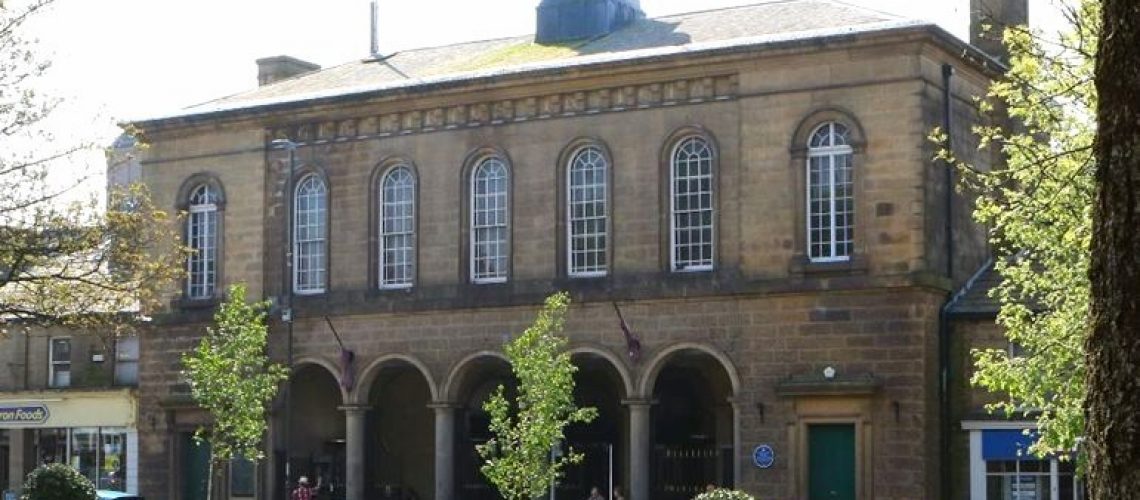
On June 28th 1838, the day of Queen Victoria’s Coronation, Bernard Edward Howard, 12th Duke of Norfolk and Premier Duke of England, began the construction, at the centre of his new Howardtown, of a Town Hall. It was quite unlike any other in a Northern cotton town.
Soon after, he followed it with a Market Hall, and in 1920 the Borough Council took part of this for offices, the Municipal Buildings. For 150 years this linked complex of buildings was at the centre of the civic, economic and social life of the town.

By the 1990s, however, the Victorian fabric was showing its age; the market was losing trade to the new supermarkets; there were better venues for social functions; the Council needed less space for staff and meetings; and the court facilities were not up to modern standards. In 2008 the court moved out after 166 years, as subsequently did most of the Council staff; and loose asbestos was discovered in the attic of the Town Hall, leading to its complete closure.
From 2003, successive plans for renewal were made but not followed through, whilst the buildings continued to deteriorate. Finally, in autumn 2018, work started on the replacement of the Town Hall roof, and last month the Council secured a £2 million grant which should enable it to complete the refurbishment and repurposing of the whole complex over the next three years.
This is therefore an appropriate point at which to tell the story of these buildings, which have been so important to the town and hopefully will be so again. We will start next week with the building of the Town Hall, and will look at why it was so unique. Its first role was as the court house, and later we will feature some of the more newsworthy, i.e scandalous, cases which were heard there, and also some of the other events – social, political and educational – which took place when the courts weren’t sitting.
From 1866 it also housed the meetings of the Council, and we will look at the sometimes-fractious relationship between it and its Howard landlords which lasted for over 50 years. We will also describe how the Market Hall and market evolved, and what happened to it in 1920 as remembered by Sam Ballington.
We will finish with the last major changes to the buildings, in the early 1970s, which were also a long time in the planning, and originally much more ambitious. As far back as the late 1940s, members of the Council recognised that there was a huge empty space above the stalls in the Market Hall which could potentially be put to good use. If the present plans come to fruition, that vision will finally be realised, over 70 years on.
Series Outline
Part 4 – Tongues, Trotters and Tripe
Part 5 – Taming The Wild High Street West
Part 9 – A Most Commodious Hall of Justice
Part 11 – The Teetotal Bigamous Schoolmaster, the Piano, and the Coffee Palace
Part 12 – Buffalo Bill, a Prepossessing Young Lady, and “A Most Outrageous, Mean And Cruel Libel”
Part 13 – Cannon, Bells, Bazaars, a New Library, and The Cricketing Clowns
Part 14 – Virtue, Truth, Liberty – and filthy stairs and leaky roof
Part 15 – A multi-use space, multi-tasking policemen, and a Marks and Sparks
Part 16 – Owd Fussy, Madam Mayor, and a generous munitions magnate